
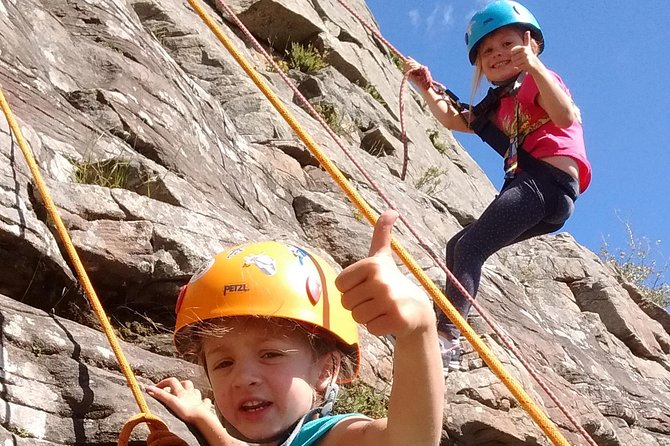
Reviewed · BANFF VIA FERRATA & ROCK CLIMBING
Rock Climbing Adventure in Banff: Beginner
Rope, chalk, and your first Banff wall. This beginner rock climbing adventure turns Banff National Park into an action-packed classroom, focused on getting you climbing safely and fast. I love the small-group size (up to 8) and the safety-first teaching, which keeps the day calm even when you’re nervous. One heads-up: climbing-shoe sizing can be tight, so plan around fit as much as you plan around technique.
You’ll meet at 7:45am at 229 Bear St in Banff, gear up, then spend about 7 hours on a local climbing area session built for first-timers and families. The idea is simple: learn the basics, practice on real routes, and leave with skills you can use next time you see a wall.
In This Review
- Key highlights
- Why this beginner rock climbing day works in Banff National Park
- Price and what’s actually included for $112.39
- Morning start at 7:45am: meeting point and how to prep
- The teaching plan: site safety, belaying, and technique basics
- Getting on the wall: how beginners actually climb in Banff
- The full 7-hour flow in one Banff climbing day
- Gear, shoe sizing, and the one thing I’d plan for
- Who this is best for (and who might want a different plan)
- Weather, flexibility, and realistic expectations
- Should you book? My quick decision guide
- FAQ
- What’s the meeting point and start time?
- How long is the rock climbing adventure?
- Is this suitable for beginners?
- What climbing gear is included?
- What’s not included in the price?
- How many people are in the group?
Key highlights
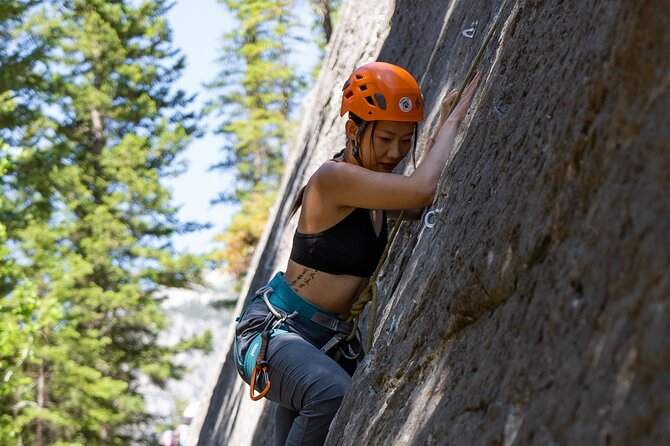
- Small group up to 8 people so you get hands-on help, not just instructions from a distance
- All climbing gear included (helmet, harness, shoes, ropes, belay devices)
- Beginner-ready coaching that covers site safety, belaying, and core climbing technique
- Real Banff climbing spots at a local area within Banff National Park
- Routes tailored to your level, including options to push difficulty as you feel ready
- Flexible add-ons your guides may cover if the group is comfortable (mock leads, rappelling practice)
Clip in for more via ferrata and climbing routes near Banff
- Banff: Mount Norquay 2.5 or 4-Hour Guided Via Ferrata Climb★ 4.9 · 305 reviews
- Small-Group Guided Via Ferrata Climbing with Banff’s Best Views★ 5.0 · 195 reviews
- Half-Day Guided Via Ferrata Climbing Tour in Banff★ 5.0 · 30 reviews
- Rock Climbing Adventure in Banff: Beginner★ 5.0 · 19 reviews
Why this beginner rock climbing day works in Banff National Park
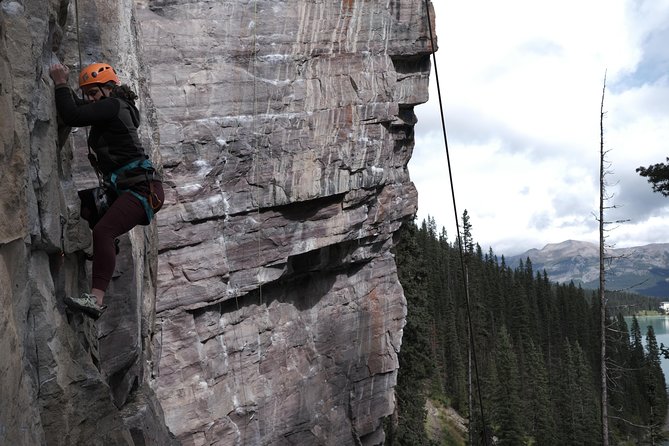
Rock climbing in Banff has a way of pulling your attention up—right where the wall is, right where the work is. That’s exactly why this program is built the way it is: you don’t just watch, you learn by doing. The structure is an intro that keeps expectations realistic while still feeling like an adventure, not a slow demo.
The most valuable part for beginners is the way the day is framed around safety plus movement. You start with the basics, then get onto routes as soon as you can control the fundamentals. And because the group stays small, you’re less likely to end up waiting while someone else figures out how belaying works.
Also, it’s not only “for adults.” This format is designed for families and friends, including young climbers (with a note that kids under 10 are directed toward a half-day option).
Price and what’s actually included for $112.39
At $112.39 per person, the best way to think about value here is equipment. This tour includes the big-ticket items that can easily turn an outdoor day expensive on your own: helmet, harness, climbing shoes, ropes, and belay devices, plus whatever else your guides need to run top-rope climbing safely.
Because gear is covered, your planning gets simpler:
- You can focus on bringing yourself (and weather-appropriate layers).
- You avoid the hassle of renting or buying climbing-specific equipment for a one-day try.
What’s not included is also clear, which helps you budget without surprises. Lunch isn’t included, and private transportation isn’t provided—so you’ll want to plan how you’ll get to the meeting point in Banff and what you’ll eat during the day.
Morning start at 7:45am: meeting point and how to prep
The day begins at 7:45am at 229 Bear St, Banff. Your activity ends back at the same meeting point, so you’re not ending the day stranded across town.
Because the program is weather-dependent, I’d plan for a “cold morning, active afternoon” reality. Banff mornings can feel crisp even when the sun comes out later. Wear layers you can move in—something that won’t restrict your shoulders when you’re reaching, climbing, and practicing belay checks.
A few prep tips that matter for a beginner day:
- Bring a water bottle. Lunch isn’t included, so hydration helps when you’re climbing more than you expect.
- Use sun protection even if it feels cool at 8am.
- If you’re bringing your own climbing shoes, keep that option in mind. Shoe fit is a real factor on small feet and wide feet alike.
And if you’re arriving early, I’d give yourself enough time to find the exact meeting spot. Parking and morning traffic in town can take longer than you think.
The teaching plan: site safety, belaying, and technique basics
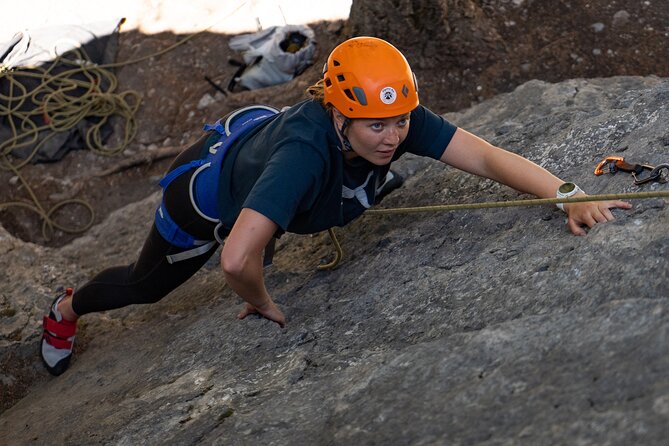
This is not a “just follow me” climbing outing. The coaching is built around safety knowledge and repeatable technique, so you can climb with more confidence (and less second-guessing).
Here’s what the program covers as core topics:
- Site safety and awareness: learning how to read the area and reduce risk
- Overhead hazard recognition: spotting where you need to be careful above you
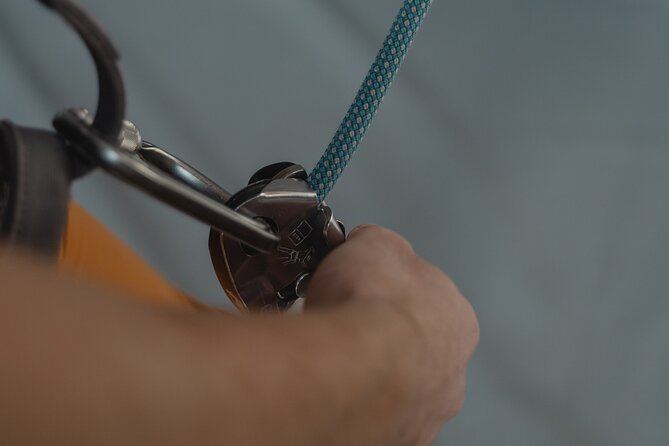
- Belaying top rope and lead climbers: building the basics of belay work so you understand what’s happening between you and the rope
- Climbing technique: how to move efficiently instead of just muscling through
The guides also adjust the lesson as needed. If your group is quick to pick things up, you might hear more advanced conversation. If the group is brand new, you’ll get time to practice the fundamentals until they click.
The big benefit for you as a beginner is that belaying and safety aren’t treated like extra theory. You learn them in the same day you need them—so your brain ties the rules to real movement.

Getting on the wall: how beginners actually climb in Banff
There’s one reason this type of “introduction” day feels so doable: routes are chosen so you can climb, not just hang onto a rope and hope.
The day’s approach emphasizes:
- getting you climbing as much as your body can handle, without rushing
- practicing the key actions that keep climbing smooth (rope control, communication, and technique)
- moving from easier routes toward harder ones as you gain confidence
When guides tailor climbs to the group’s level, you feel it right away. You’re not stuck watching others get to progress while you wait. And if you’re with kids, the pacing matters even more—because a first-time wall can go great or go sideways depending on how patient and clear the instruction is.
In the best sessions, you’ll feel like the day is a sequence of small wins: control your position, place your feet, learn when to pull and when to shift, then repeat.
The full 7-hour flow in one Banff climbing day
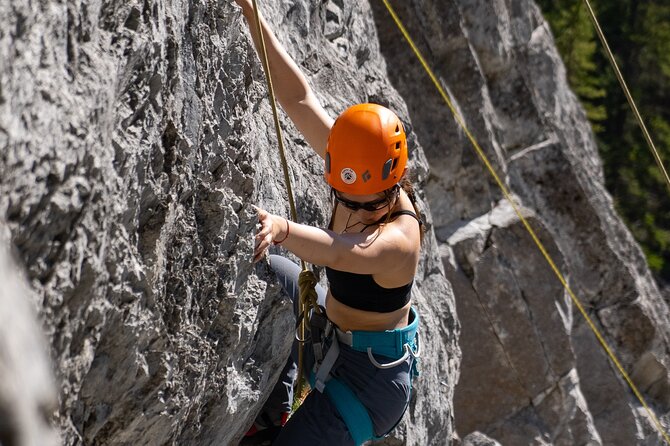
Even though the outing is only one day, you’re not stuck on a single route the entire time. The program is structured to keep you climbing and learning, with the balance shifting as the day goes.
A practical way to picture the day:
- You arrive, meet your guides, and get fitted with gear (helmet, harness, shoes).
- You start with the safety and movement basics so the first climbs feel controlled.
- Then you move into practicing top-rope climbing on a variety of routes.
- As you improve, you may get introduced to more technical concepts and, depending on the group, additional skills like steeper-rock techniques, using quick draws on bolts, or building top-rope anchors.
- If conditions and comfort allow, you might practice things like mock leads and rappelling movements (these are listed as possible additions).
Because the day is focused on “as much climbing as you can handle,” the schedule tends to reward energy. You’ll likely leave feeling tired in a good way: forearms working, legs strong, and a clearer idea of what kind of climbing you’d want to try next.
Gear, shoe sizing, and the one thing I’d plan for

Gear is included, which is great for beginners. You get helmet, harness, climbing shoes, ropes, and belay devices. That removes one major barrier: you don’t need to know what to rent or buy.
But the shoe question deserves a careful thought. One clear issue that can pop up is limited shoe-size availability on-site. If your feet run small, large, wide, or sensitive to tight toe boxes, you might find your options narrower than expected. And uncomfortable shoes can steal focus from technique—your feet need to feel secure on footholds.
Here’s how to reduce the risk:
- If you know your shoe size won’t be flexible, ask questions in advance when booking.
- If you’re comfortable bringing your own shoes, you might choose to do that if it fits your style.
- Plan for the day even if shoes aren’t perfect. Good climbs are about movement, and you can often adapt quickly once you start climbing.
This is the one part of the day where preparation pays off.
Who this is best for (and who might want a different plan)
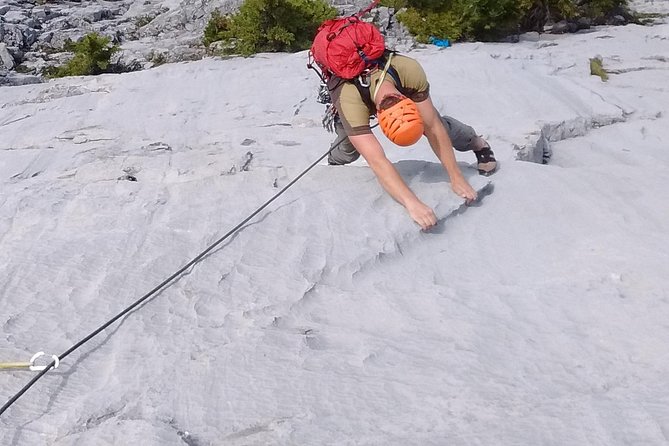
This is a strong match for:
- true beginners who want structured instruction and a clear safety framework
- families with kids who can follow basic directions and are ready to try
- first-time climbers who learn best by doing (not by watching)
If you have kids under 10, you’ll want to ask about the half-day program option. The main day is designed as a full outing, and the shorter format can be better for attention span and energy levels.
If you already climb indoors, you’ll still find value here. Outdoor climbing adds friction, exposure, and route variability. Plus, this day includes belaying and technique components aimed at making you safer and more aware on real rock.
Weather, flexibility, and realistic expectations
This experience requires good weather. If it’s canceled due to poor weather, you’ll be offered a different date or a full refund.
That matters because climbing is not the kind of activity that works through cold rain. On a clear day, you’ll get a smooth schedule. On a marginal day, expect the guides to be conservative—because safety comes first.
So I’d book with a calm plan: if you’re in Banff for a few days, choose a day that gives you options.
Should you book? My quick decision guide
Book this if you want:
- a beginner-friendly climbing introduction with real instruction
- small-group attention and safety education that isn’t glossed over
- all the gear handled for you, so you can spend your energy climbing
Skip it (or ask more questions before committing) if:
- shoe fit is a major issue for you and you hate being uncomfortable
- you can’t handle outdoor weather changes, even with a flexible date option
For most people in Banff who want an active, practical way to learn climbing, this is a smart choice. You’ll get on the wall, learn the why behind safety, and come away with enough confidence to try again.
FAQ
What’s the meeting point and start time?
You’ll meet at 229 Bear St, Banff, AB T1L 1C3, Canada. The start time is 7:45am, and the activity ends back at the same meeting point.
How long is the rock climbing adventure?
The duration is listed as 7 hours (approx.).
Is this suitable for beginners?
Yes. The program is an introduction to rock climbing and is designed for anyone regardless of previous experience. Guides start with the basics and can adjust discussions to your comfort level.
What climbing gear is included?
All climbing gear is included, including helmet, harness, climbing shoes, ropes, and belay devices.
What’s not included in the price?
Lunch isn’t included, and private transportation is also not included.
How many people are in the group?
The group maximum is 8 people.
More Via Ferrata & Climbing near Banff
More Tour Reviews in Banff


Still scrolling? A few other Banff adventures worth a spot on the itinerary

Banff Via Ferrata & Rock Climbing, compared.
 ★ 4.9Mount Norquay 2.5 or 4-Hour Guided Via Ferrata ClimbFrom $145305 reviews
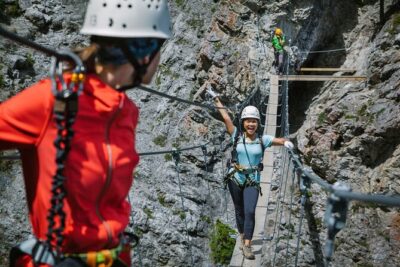 ★ 5.0Small-Group Guided Via Ferrata Climbing with Banff’s Best ViewsFrom $149195 reviews
 ★ 5.0Jasper Ice Climbing ExperienceFrom $17746 reviews
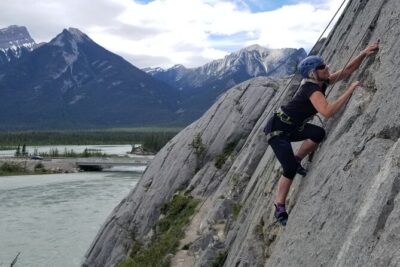 ★ 5.0Jasper Rock Climbing ExperienceFrom $10842 reviews
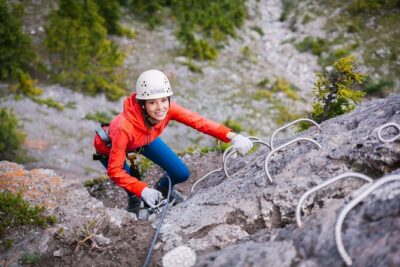 ★ 5.0Half-Day Guided Via Ferrata Climbing Tour in BanffFrom $19630 reviews
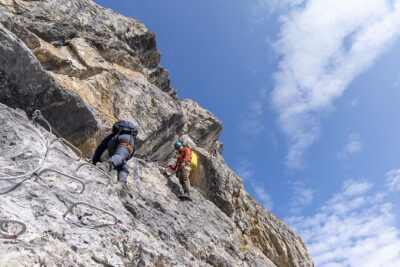 ★ 5.0Small Group Banff Skyline Via Ferrata 5-hour TourFrom $24315 reviews
 ★ 3.5Ice Climbing Adventure in Banff: BeginnerFrom $19412 reviews
 ★ 5.0Introduction to Ice Climbing for BeginnersFrom $17911 reviews
Browse the lists this tour appears in