
Reviewed · BANFF VIA FERRATA & ROCK CLIMBING
Ice Climbing Adventure in Banff: Beginner
Vertical ice is a controlled skill.
What makes this Banff day feel special is how fast you go from setup to swinging ice tools on real frozen waterfalls, with ACMG/IFMGA guides keeping everything organized.
I also like the teaching style: you don’t just watch. You practice fundamentals like walking in crampons and top-rope belaying, then you climb with the system you learned.
One drawback to consider is logistics and cold. The icefall location can vary, you’ll need your own transportation to the site, and extreme temperatures can shorten the day.
In This Review
- Key things that make this ice-climbing day worth it
- Beginner Waterfall Ice Climbing in Banff: What You’re Actually Doing
- Gear Fitting and Safety: The Part That Makes Beginners Feel Safe
- Meeting at 229 Bear St: The First Test Is Finding the Office
- Banff National Park First: Learn the Rhythm Before the Ice
- Johnston Canyon Ice Time: Crampons, Knots, and Then the Wall
- Grassi Lakes and the Bonus Time: More Skill Work When Conditions Allow
- The Skills You’ll Take Home (And Use Again)
- Core beginner skills you’ll learn
- Possible progress if conditions and your comfort level fit
- Price and Value: Is $194.36 Worth It?
- Weather Reality in the Rockies: Cold Can Change the Day
- Who This Beginner Ice Climbing Day Suits Best
- Should You Book This Beginner Banff Ice Climbing Day?
- FAQ
- What’s included in the ice climbing experience price?
- What should I bring, since lunch and transportation aren’t included?
- How long is the experience?
- Where does the experience start and end?
- Is this experience for complete beginners?
- How large are the groups?
Key things that make this ice-climbing day worth it
- Pro-guided learning: You get gear fitting, safety instruction, and hands-on coaching throughout
- Real skills, not a demo: You learn crampons, belaying basics, and how to move on steep ice
- Beginner-friendly pacing: It’s designed for complete beginners, with customizable progress for stronger climbers
- Johnston Canyon ice time: Expect to hike to the ice wall area (often around 20 minutes) and climb soon after
- Small groups: Maximum of 12 people, which helps you get more direct attention
Clip in for more via ferrata and climbing routes near Banff
- Banff: Mount Norquay 2.5 or 4-Hour Guided Via Ferrata Climb★ 4.9 · 305 reviews
- Small-Group Guided Via Ferrata Climbing with Banff’s Best Views★ 5.0 · 195 reviews
- Half-Day Guided Via Ferrata Climbing Tour in Banff★ 5.0 · 30 reviews
- Rock Climbing Adventure in Banff: Beginner★ 5.0 · 19 reviews
Beginner Waterfall Ice Climbing in Banff: What You’re Actually Doing
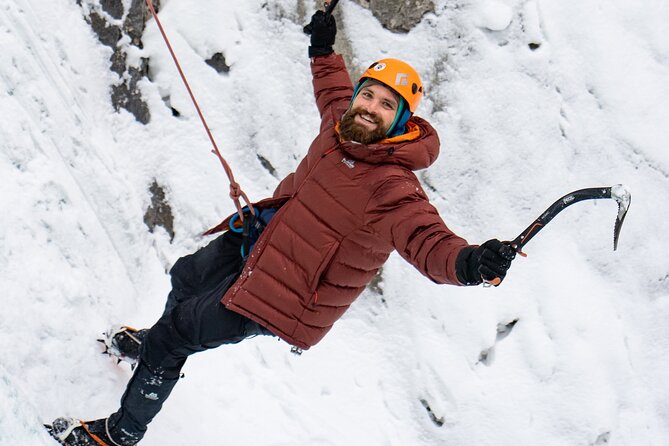
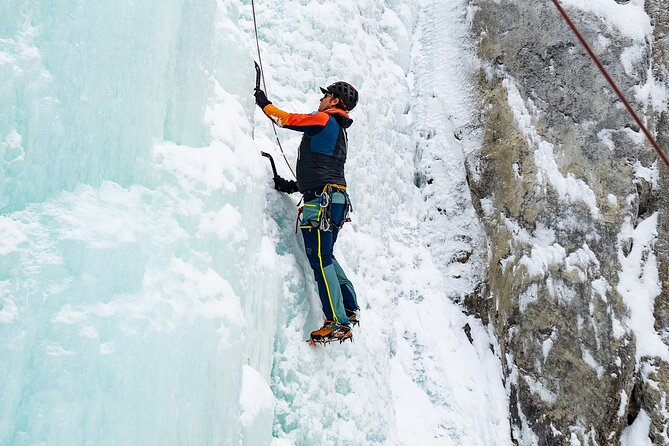
Waterfall ice climbing in the Canadian Rockies is exactly what it sounds like: climbing on frozen curtains of ice that form where water freezes in winter. The part many people underestimate is that it’s not “free climbing on the frozen stuff.” It’s a guided, safety-first sport where you learn movements and gear use step by step—then you apply them quickly.
For a beginner program, the goal is simple: you’ll build enough confidence to climb the wall on a top-rope setup while learning how your body works in crampons and how your tools help you stay stable.
You should expect your day to feel like a mix of classroom-and-fieldwork. There’s time for setup and technique, then there’s real vertical climbing. And unlike a lot of adventure activities where you only get one shot, this format is structured so you can keep improving between climbs.
Gear Fitting and Safety: The Part That Makes Beginners Feel Safe
The gear is included, and that’s a big value piece. You’ll be given a helmet, harness, ice tools, crampons, and climbing boots. That means you’re not stuck trying to guess sizing at home or renting the wrong thing.
More important than the gear itself is how you’re taught to use it. The program covers core safety topics such as:
- Site safety and awareness
- How to walk in crampons without losing balance
- Belaying top-rope climbers
- Moving on steep ice (swinging ice tools and using crampons)
If you’re new, this is the difference between a scary experience and a controlled one. When you understand how crampons bite and how ice tools create points of contact, the climb starts to feel like a skill you can learn—not a gamble.
Also, you’re climbing with professional Mountain Guides accredited with ACMG/IFMGA. That matters in practice. The guide system helps keep training consistent and ensures safety checks happen before you’re on the ice.
Meeting at 229 Bear St: The First Test Is Finding the Office
The day starts at 7:45 am at 229 Bear St, Banff. It’s near public transportation, which is helpful if you’re car-light. You’ll get a mobile ticket, so you don’t need to print anything.
Here’s the practical detail that can affect your stress level: the office can be tricky to locate because it’s in the bottom floor of an indoor mall. If you’re arriving early, give yourself time to confirm where to go.
You also need to handle transportation to the climbing site. Private transportation is not included, so you’ll either coordinate rides or use whatever local option makes sense for your group. One useful mindset: treat this as part of your planning, not an afterthought.
Group size stays small—up to 12—which helps the day feel personal. You won’t be lost in a crowd, and guides can adjust pace based on how you’re doing with balance and tool use.
Banff National Park First: Learn the Rhythm Before the Ice
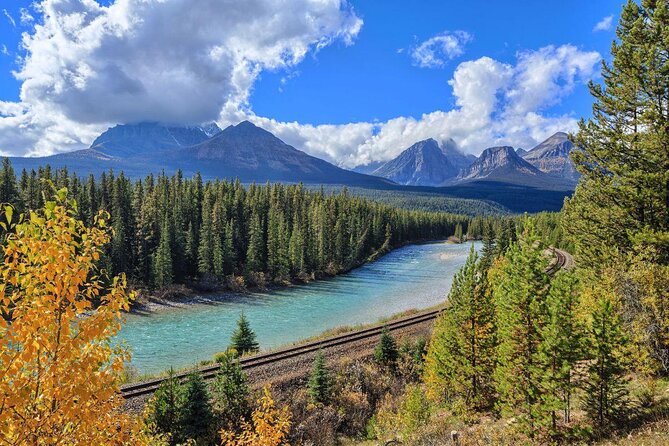
You’ll spend time in Banff National Park as the day gets going. Even though the ice is the headline, this early time is what helps beginners succeed.
This phase typically functions like a warm-up for technique:
- You get safety and expectations laid out
- You practice key movements before you’re committed to the ice
- You build comfort with your harness setup and crampon stance
Think of it as learning the rhythm of the sport. Ice climbing punishes sloppy footwork fast. So you want your feet and balance ready before the first steep section.
One reality check: you’ll likely be working in cold conditions for hours. Even if your body is fine, your hands may not love cold. That’s why gear fitting and careful practice matter before you start climbing.

Johnston Canyon Ice Time: Crampons, Knots, and Then the Wall
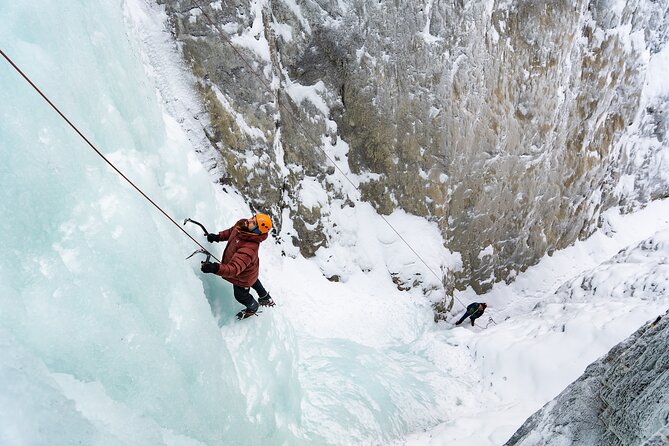
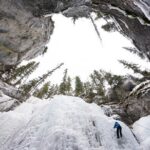
Johnston Canyon is where the “wow” factor usually kicks in. You’ll head to the ice area (often near Johnston Canyon), learn what you need for the climb, and then get off the ground quickly.
A common experience pattern looks like this:
- You hike to the ice wall area (you might find it’s around a 20-minute walk)
- You learn belaying basics and how to tie knots correctly
- You get strapped in and start climbing
Learning belaying for top-rope climbers is a big deal. It helps you understand the rope system you’re relying on, and it also makes the whole experience feel more like team training rather than just being pulled up by a guide.
When you finally put crampons onto the ice, the training clicks. The steep movement portion focuses on:
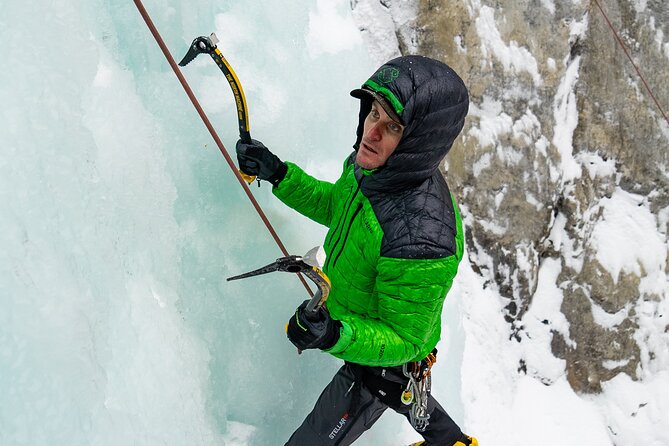
- How to swing the ice tools safely
- How to place your crampons for traction
- How to keep your body positioned so you don’t fight the ice
If you’re completely new, the early climbs often feel exhilarating in a way that surprises people. You get to the top and suddenly it feels like you did something real, not staged.
One beginner-friendly teaching example you can take seriously: a guide named Shea was described as an excellent teacher who made first-timers feel safe while keeping the climbing doable. That’s the kind of guide style you want to look for—clear coaching and steady reassurance.
Grassi Lakes and the Bonus Time: More Skill Work When Conditions Allow
Grassi Lakes is included as a stop, which gives the day a nice arc: you’re not stuck in one exact “spot and repeat.” The idea here is to use the day well—time outdoors, more views, and more opportunity to keep building on your skills.
What you do at Grassi Lakes will depend on conditions and how the guide plans the day around the icefall location (which can vary). But the value of this stop is that it can function as:
- Additional time for skill refinement
- A chance to try another ice section if conditions allow
- A break from constant climbing while still staying outside in the Rockies
Even if you don’t climb “all day long,” the time isn’t wasted. Beginners learn through repetition: footwork, tool placement, belay understanding, and controlled body positions. That takes more cycles than people expect.
The Skills You’ll Take Home (And Use Again)
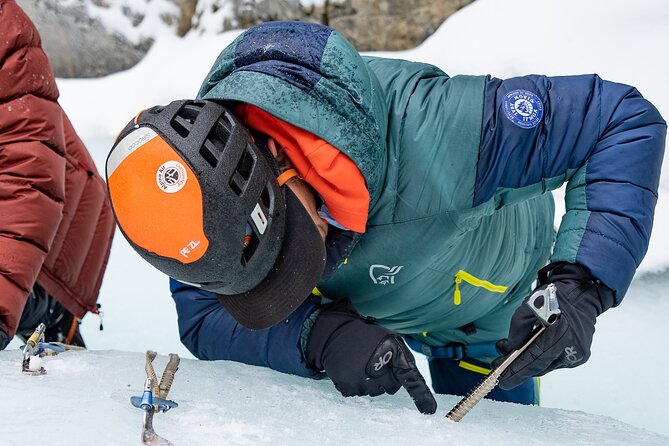
This is a beginner program, but it’s not light on substance. You’ll cover foundational skills that are genuinely useful if you ever try another day of ice climbing or even want to understand the sport better.
Core beginner skills you’ll learn
- Site safety and awareness: how to move and communicate safely around the climbing area
- Walking in crampons: balancing and stepping technique on uneven or icy surfaces
- Belaying top-rope climbers: understanding the role and the basics of managing rope
- How to move on steep ice: swinging ice tools, and using crampons for traction
Possible progress if conditions and your comfort level fit
The program also mentions that with full-day or multi-day options, you may progress toward more advanced techniques such as:
- Placing ice screws and building V-threads
- Mock leading
- Rappelling
For a shorter beginner day, you may not reach every advanced item. Still, the important takeaway is that the coaching is capable of expanding—so you’re not stuck in a one-note intro.
If you’re the type who learns fast and likes structure, you’ll likely leave feeling like you did more than “try it.” You’ll know what to practice next time.
Price and Value: Is $194.36 Worth It?
At $194.36 per person for about 7 hours, this isn’t a budget activity—but it’s also not overpriced when you look at what’s included.
You’re paying for:
- All climbing gear: helmet, harness, ice tools, crampons, boots
- Professional ACMG/IFMGA guiding and safety oversight
- Instruction that covers both climbing technique and safety skills (not just a guided ascent)
The cost makes more sense when you compare it to the real expense of learning with proper instructors. Ice climbing gear is specialized, and the sport has enough safety complexity that doing it “on your own” is not the right path.
Two items are not included: private transportation and lunch. That’s where you can control your total budget. If you plan a ride in advance and bring a simple lunch/snacks strategy, the day becomes far more comfortable financially and logistically.
Bottom line: this feels like good value if you care about safety, instruction, and a real chance to climb—rather than just take photos near the ice.
Weather Reality in the Rockies: Cold Can Change the Day
Ice climbing is weather-driven. If temperatures are extreme, the day can become less enjoyable and potentially shorter. One guide experience shared by a participant involved -24 C conditions with guide Nolan, and the day was cut short because it was too cold for people to really enjoy the climb.
That doesn’t mean the program is unreliable. It means you should plan with flexibility. Dress like you’re going to be outside a long time, and expect the guide to make call-by-call decisions based on safety and comfort.
Practical advice for your packing:
- Layer for cold wind and long stationary moments
- Protect hands and ears; cold reduces fine motor control fast
- Keep expectations realistic: in very harsh conditions, you might get less climbing time than ideal
Who This Beginner Ice Climbing Day Suits Best
This program is described as suitable for complete beginners and also customizable for more experienced people who want to learn new skills.
It’s a good match if:
- You want a structured first ice climb with top-rope safety and instruction
- You want to learn how to walk in crampons and belay, not just climb once
- You’re okay with a small-group outdoor day in cold conditions
It may be less ideal if:
- You’re not prepared to handle significant cold for hours
- You don’t want to handle transportation to the climbing site
- You need an ultra-flexible day with no “plan adjustments” for weather and ice location
Should You Book This Beginner Banff Ice Climbing Day?
Yes—if you want real instruction and a safe first climb. This is one of those activities where the value is in the coaching: you learn crampons, belaying fundamentals, and how to move on steep ice. You also get professional guiding and included gear, which removes a lot of friction.
I’d especially recommend booking if you’re chasing a true Rockies skill, not just a single thrill. The day is built so you leave with something you can explain at home—how you learned to manage crampons, what top-rope belaying feels like from the other side, and how steep ice movement works when it’s taught properly.
And plan for the cold and the logistics. If you do that, you’ll get the best part: a memorable, genuinely learnable adventure in Banff’s winter wonderland.
FAQ
What’s included in the ice climbing experience price?
The price includes all climbing gear: a helmet, harness, ice tools, crampons, and climbing boots, plus professional Mountain Guides with ACMG/IFMGA credentials.
What should I bring, since lunch and transportation aren’t included?
You’ll need to handle private transportation to the climbing site and bring your own lunch. The tour provides the technical climbing gear, so focus on staying warm for the day outdoors.
How long is the experience?
The duration is about 7 hours.
Where does the experience start and end?
It starts at 229 Bear St, Banff, AB T1L 1C3, Canada at 7:45 am, and it ends back at the same meeting point.
Is this experience for complete beginners?
Yes. It’s designed for complete beginners, and the coaching can be customized for people with more experience too.
How large are the groups?
The maximum group size is 12 travelers.
More Via Ferrata & Climbing near Banff
More Tour Reviews in Banff

Still scrolling? A few other Banff adventures worth a spot on the itinerary
Banff Via Ferrata & Rock Climbing, compared.
 ★ 4.9Mount Norquay 2.5 or 4-Hour Guided Via Ferrata ClimbFrom $145305 reviews
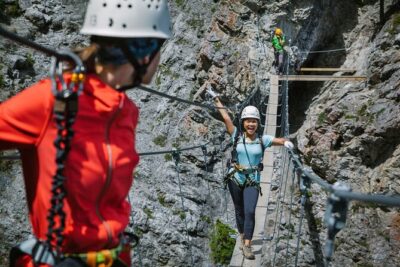 ★ 5.0Small-Group Guided Via Ferrata Climbing with Banff’s Best ViewsFrom $149195 reviews
 ★ 5.0Jasper Ice Climbing ExperienceFrom $17746 reviews
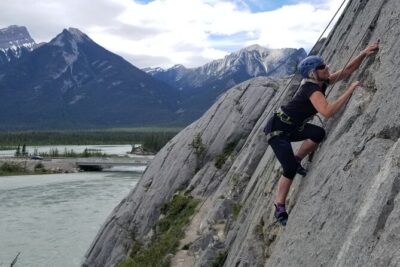 ★ 5.0Jasper Rock Climbing ExperienceFrom $10842 reviews
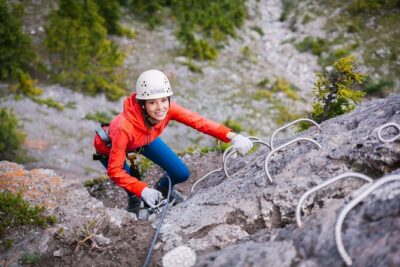 ★ 5.0Half-Day Guided Via Ferrata Climbing Tour in BanffFrom $19630 reviews
 ★ 5.0Rock Climbing Adventure in Banff: BeginnerFrom $11219 reviews
 ★ 5.0Small Group Banff Skyline Via Ferrata 5-hour TourFrom $24315 reviews
 ★ 5.0Introduction to Ice Climbing for BeginnersFrom $17911 reviews
Browse the lists this tour appears in