
Reviewed · AUDIO TOURS
Discover the Rockies: 6 Self-Guided Smartphone Audio Tour Bundle
Banff’s stories show up when you need them. This Discover the Rockies bundle strings together six self-guided audio tours across Banff, Canmore, and the classic drives toward Lake Louise and the Icefields, with more than 185 audio stories you can take in on your own timetable.
What I like most is that the audio is hands-free (it plays automatically) and you can download everything ahead of time, so you don’t have to burn mobile data or chase Wi‑Fi while you’re stuck in scenic-but-slow traffic. You’re also not locked into a rigid schedule: you can pause, skip, and linger at 50+ points of interest for as long as you want.
One real consideration: the whole experience depends on your phone and GPS working smoothly. If you struggle with downloading the tours or the map audio timing feels glitchy, you’ll want a little extra prep time before you leave your hotel—especially since walking is involved and the site notes a moderate fitness level.
In This Review
- Key highlights worth marking on your map
- Price and time: what you actually get for $35.10 per group
- Offline audio and hands-free play in Banff: the make-or-break prep
- How the six tours connect: Banff, Canmore, and the roads between
- Canmore Walking Tour: bears, boardwalks, and the Three Sisters names
- A mining town vibe, even in a pretty setting
- Culture stops: museum artifacts, events, and odd-but-meaningful art
- A walk that ends in history: barracks, churches, and inukshuks
- Banff Walking Tour: pavilions, cabins, and the park’s people
- Start with a story-heavy museum moment
- A hillside park with two “science-y” pavilions
- Small details that turn into big meaning
- Pioneer homes and a writer’s legacy
- Brewster, Central Park rocks, and the taxidermy National Historic Site
- Heritage buildings and memorials
- Driving the Rockies: Kananaskis, hot springs, naming stories, and mountain icons
- Upper hot springs: stop if you want to linger
- Ski resort and tunnel through the mountain
- Three Sisters and the names you’re meant to learn
- The Bow River returns again and again
- Camping and small mountain villages
- Lake Agnes Tea House Trail and Tunnel Mountain: short hikes with built-in story
- Best way to plan your day: use this bundle like a choose-your-own-adventure
- Should you book this Discover the Rockies audio bundle?
- FAQ
- What languages are the tours offered in?
- Do I need Wi‑Fi or mobile data during the tour?
- How long does the experience take?
- How much does it cost?
- Is transportation included?
- What kinds of tours are included?
- Are tickets to attractions included?
- Does the bundle include a live guide?
- Can I cancel and still get a full refund?
- Does the tour specify any physical fitness expectations?
Key highlights worth marking on your map
- Offline-first audio: download on Wi‑Fi before you go; no signal needed during the tour
- 6 tours in one app: driving, walking, and nature routes tied together for flexible days
- Live GPS for foot routes: the walking tours use a live GPS map so you can self-navigate
- You control the pace: skip what you’re not into, and stop at attractions as long as you like
- Big-name scenery, plus naming stories: you’ll learn how places got their names and what happened there
- Works for groups: priced per group (up to 15), private to your group
Let a mountain local lead the way on more guided outings in Banff
- Banff: Evening Wildlife Safari Guided Tour★ 3.9 · 465 reviews
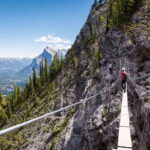
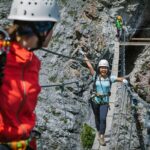
- Banff: Mount Norquay 2.5 or 4-Hour Guided Via Ferrata Climb★ 4.9 · 305 reviews
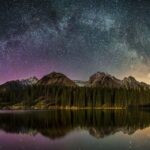
- Banff: Guided Sunset and Stargazing Tour★ 4.9 · 262 reviews
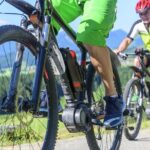
- eBike and Hike Banff to Johnston Canyon small group guided program★ 5.0 · 197 reviews
Price and time: what you actually get for $35.10 per group
This bundle costs $35.10 per group (up to 15 people). That pricing matters in Banff because once you’re there, most “value” disappears fast—paid guides, bus tours, and timed tickets stack up quickly. Here, you’re essentially buying access to a library of audio routes, so the more people you bring, the more cost-effective it becomes.
Plan for about 3 to 6 hours depending on how many stops you choose and how long you take on the walking bits and pull-offs. Since it’s self-guided, you’re not racing anyone else’s itinerary. You can also repeat it later because the package includes lifetime access in the Tripvia Tours app.
It’s also worth knowing what’s not included: you’ll bring your own smartphone (or tablet), and you’ll use your own vehicle. Attraction tickets are not part of the price, so if you want to enter a specific site, check that separately.
Offline audio and hands-free play in Banff: the make-or-break prep
The strongest practical advantage here is that you can download on Wi‑Fi before and then use the tours without relying on cell service. In the Rockies, that’s not a small detail. You’ll be driving through areas where signal can be spotty, and you don’t want your plan to hinge on it.
A few setup tips that keep this smooth:
- Download before you hit the road, not at the first parking lot you find.
- Make sure your phone battery is healthy before you start (you’re pairing GPS with continuous audio).
- If audio/GPS timing feels off, restart the app and try again—there’s support guidance tied to this kind of issue.
The bundle is designed to play automatically. That’s great because it reduces screen-checking while you’re walking or pulling into viewpoints. It also means you can focus on what you’re seeing rather than tapping through menus.
Finally, one small reality check: some recommended places might be closed or hard to access due to season. The audio is still useful, but don’t plan your whole day around a single “must stop” location.
How the six tours connect: Banff, Canmore, and the roads between
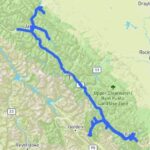
This bundle doesn’t just cover one town. It spreads your day across Banff, Canmore, and the drive up toward Lake Louise and the Icefields Parkway. That matters because the best Rockies trips usually mix “town life” with “big driving views.”
You’ll rotate through a few formats:
- Driving tours (including Icefields Parkway and Calgary ↔ Lake Louise)
- Walking tours focused on sights in Banff and Canmore
- Nature/hiking tours including the Lake Agnes Tea House Trail and Tunnel Mountain
Even if you only do part of the bundle, you’ll still get the point: the audio turns common-looking road moments—like a roadside view, a mountain silhouette, or a street corner—into something with story. You’ll hear about how places formed, how the park was shaped, and how locals think about their mountains.
Canmore Walking Tour: bears, boardwalks, and the Three Sisters names
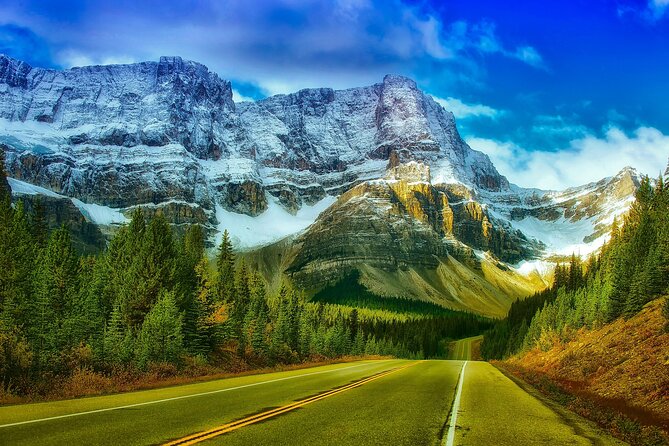
Canmore’s walking tour is one of the best ways to get oriented without paying for a guided group. It uses a live GPS map, and the tour is built so you can pause and explore at your own pace, then the audio picks up when you’re back on track.
You’ll start with a big visual identity: the tour points you toward the Three Sisters Gallery building and tells you why it’s worth a peek. From there, you move through a string of small, specific landmarks:
- A lesson on how the Canadian Pacific Railway affected Canmore’s development
- A very British-looking detail: the red telephone box
- Public art featuring a black bear sculpture and then a grizzly bear sculpture, with differences explained as you walk
- Mountain-name stories tied to the north view, including Princess Margaret Mountain, Squaw’s Tit, Mount Charles Stewart, Mount Lady MacDonald, and Mount Grotto
If you like places where the “why” matters, this tour delivers. You’re not only looking. You’re learning how the names and symbols connect to people and past industries.
Set your own pace with more self-guided routes in Banff
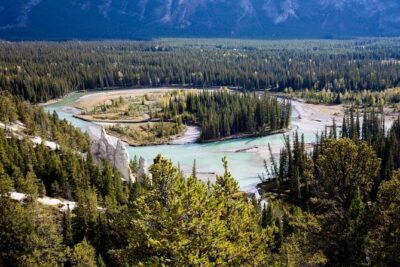
A mining town vibe, even in a pretty setting
Canmore’s identity includes mining, and the tour reflects that without turning it into a lecture. You’ll see:
- A coal mining cars monument highlighting how mining shaped early life
- Creeks/ponds with fish and forest areas with songbirds (the tour frames this as an easy walk that still feels alive)
Then the walk transitions into the river world: the audio guides you along a boardwalk and talks about the Bow River cutting through Canmore. It’s an easy change of scenery—calm, water-forward, and a nice break from mountains-on-every-side.
Culture stops: museum artifacts, events, and odd-but-meaningful art
Canmore is also big on culture, and the walking tour leans in:
- You’ll be pointed toward the museum with over 10,000 artifacts, welcoming visitors since 1984
- The tour also mentions a small park connection between Canmore and Higashikawa in Japan
- You’ll stroll down Main Street, with shops, restaurants, and galleries part of the route
There are also murals and folk-focused landmarks:
- The Isabelle Dube mural, with the tragic story behind it
- The wooden Stan Rogers stage inspired by the man, plus notes on the Canmore Folk Fest
A walk that ends in history: barracks, churches, and inukshuks
Don’t miss the more “town history” stops built into the route:
- An early Presbyterian church and the mystery behind its name
- A look at the barracks and how it helped maintain law and order in rougher days
- A large inukshuk and an “odd sculpture” tied to how Canmore itself got its name
If you’re trying to understand Canmore fast—its industries, its landmarks, and its public art—this walk is a smart use of time.
Banff Walking Tour: pavilions, cabins, and the park’s people

Banff’s walking tour also uses a live GPS map, and it’s built for exactly what you want in a resort town: you can stop often, spend extra time where you care, and ignore what you don’t. You’ll follow a route that mixes parks, historic buildings, and memorials tied to the National Park story.
Start with a story-heavy museum moment
The tour begins by pointing you to the museum and frames the past through seasonal movement—native people following buffalo herds, setting up camp seasonally, hauling tipi equipment by travois. That kind of context matters because Banff can feel like a postcard now, but it wasn’t always one.
Then you get the “wow” architecture stop—there’s an incredible building you’ll be directed to, and the audio explains what you’re looking at while you take it in.
A hillside park with two “science-y” pavilions
Next up is a 4-acre park built in the 1930s with gardens terraced into the hillside. Within that setting, the tour points you to:
- The Cambrian pavilion, tied to protecting and enhancing designated wilderness areas
- The Devonian pavilion, described as an example of rustic design in the national parks program
This is one of those places where audio helps because the pavilions are easy to skim past if you’re only looking at flowers and stonework. With the audio, you learn why the features exist.
Small details that turn into big meaning
Banff’s tour repeatedly rewards attention:
- Look for the elevation marker implanted in the sidewalk (it’s coin-like), then learn what it means
- You’ll pass the Crandell Peck Cabin, built in 1907, using mostly locally sourced materials
- You’ll spot an inukshuk, with a quick explanation of what that is
Then you hit infrastructure history: the audio points out the Banff Powerstation, explaining how it powered streetlights and homes in 1905. That’s a fun pivot because people often think of Banff as only scenery; this reminds you it was also a functioning town built with technology.
Pioneer homes and a writer’s legacy
The tour also highlights named people and named residences:
- The Tarry-a-while residence, home of Mary Schaffer Warren, known for early exploration writings and paintings about the Canadian Rockies
- A look at the historic home and the life of a pioneer family across nine decades
Brewster, Central Park rocks, and the taxidermy National Historic Site
You’ll hear about Caribou Corner, tied to when the Brewster family came to Banff in 1886. Then you’ll see sculptural and oddball elements that make Banff memorable, like the four sentries sculpture on Banff Ave and a “pile of rocks” in Central Park.
One of the most specific facts in the whole walk: the tour explains a National Historic Site of Canada, established in 1895, designed to house taxidermy specimens of animals, plants, and minerals linked to the park. If you like park history, that stop hits.
Heritage buildings and memorials
You’ll also be guided to:
- The Dave Whyte block (one of the oldest remaining, largely intact commercial buildings)
- Harmony Lane, built in rustic national park style with river stone pillars
- A church story starting with St. Paul’s church established in 1887, then a church built in 1930
The route ends with official Banff remembrance: you’ll be directed to the Superintendent’s Residence (responsibilities explained) and the Banff Legion with a cenotaph built in 1920.
If you want Banff without feeling like you’re only shopping or only taking photos, this walk gives you structure.
Driving the Rockies: Kananaskis, hot springs, naming stories, and mountain icons
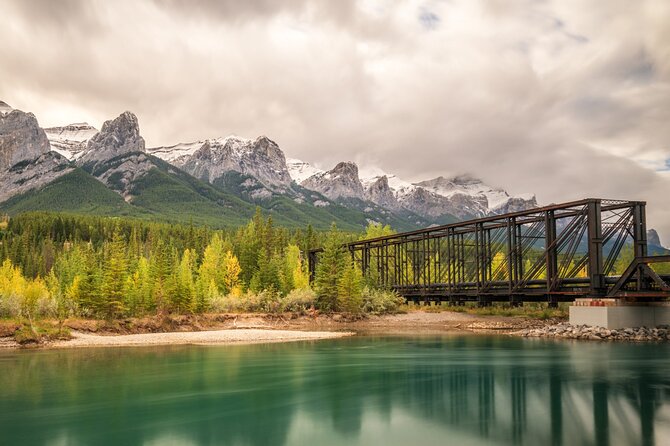
The driving portion is where this bundle earns its keep. You get a chain of “pull-off moments” where the audio points out what you’re seeing and why it matters. You can stop at places for as long as you like, and the tour is designed around flexibility rather than strict timing.
Here are the kinds of stops you’ll hit through the driving audio:
- A look at Kananaskis Country and its beauty
- A community marker: the last industrial building before entering (or after leaving) Banff National Park
- Explanations for place names, including how Canmore got its name
- An iconic mountain introduction—how it got its name and who discovered it
- Banff town identity and a “castle” shaped mountain moment
- A story behind the iconic Stampede, described as told from the inventor’s perspective (sort of)
- Another naming lesson: why the name says it all for a mountain
- A stretch driving through a large portion of Banff National Park, with park info in the background even when you’re not inside
Upper hot springs: stop if you want to linger
One standout is the upper hot springs discovery story. The audio explicitly encourages you to stop and visit during the tour, and the format supports that. This is exactly how self-guided audio should work: you learn, then you decide.
Ski resort and tunnel through the mountain
You’ll also be pointed toward a ski resort just outside Banff and given the reason it’s different from other nearby resorts. Then there’s the practical road-to-geology story: you’re told about the tunnel through a mountain, including why it was built, when, and what went wrong.
Three Sisters and the names you’re meant to learn
If you like mountain silhouettes with a backstory, don’t skip the Three Sisters stop. The audio identifies the iconic group and tells you the sisters’ names. That turns a pretty view into a “now I know what I’m looking at” moment.
The Bow River returns again and again
The driving audio keeps coming back to the region’s water and valley lines. It calls out the mountain river you drive alongside multiple times, and later it leans into Bow River connections as you move toward town and viewpoints.
Camping and small mountain villages
There are also calmer, slower stops built in: you’ll hear about a campground you’ll pass by and a small mountain village where you can decide whether to stop. If you like an itinerary that doesn’t force you into every attraction, these “optional” points are the sweet spot.
Lake Agnes Tea House Trail and Tunnel Mountain: short hikes with built-in story
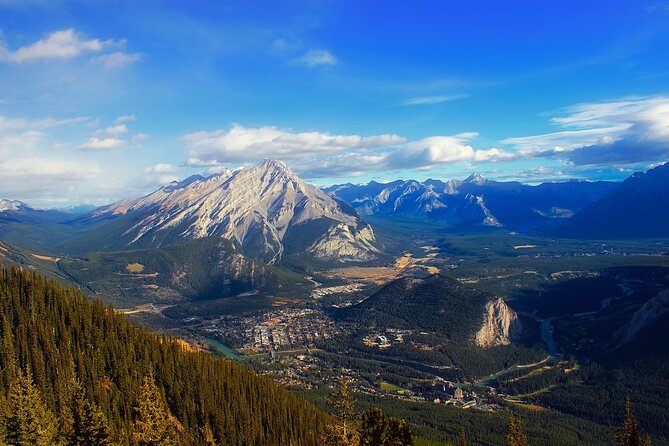
This bundle includes two nature/hiking components: Lake Agnes Tea House Trail and Tunnel Mountain. The listing doesn’t give step-by-step distance or elevation in the details you provided, but it does make the format clear: these are audio-supported routes meant to be taken on foot.
Here’s the practical value for you:
- You don’t need to guess what to pay attention to; the audio gives you direction.
- You can match the pace of the trail to your energy level since it’s self-guided.
- Because the tour bundle also includes driving and walking, these hikes act like a reset button between road legs.
Since the experience specifies a moderate fitness level, be honest about what your day can handle. If you’re arriving in Banff with tired legs (long flight, jet lag, or nonstop driving), plan to do the shorter walk parts and keep the hike choices more flexible.
Best way to plan your day: use this bundle like a choose-your-own-adventure
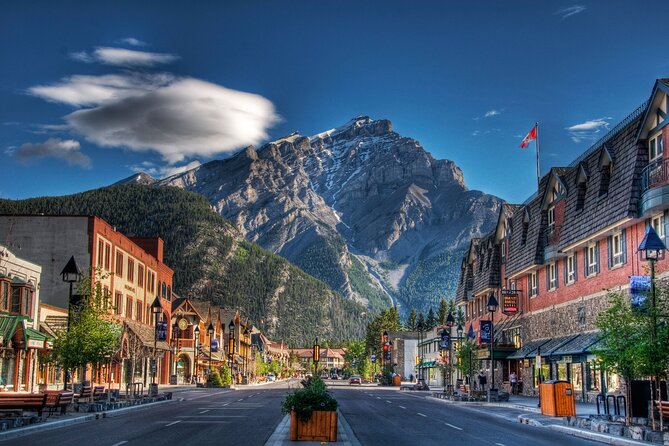
The bundle works best when you stop trying to “finish everything.” Instead, I’d plan around the type of day you want:
- Town-focused day: Do the Banff walking tour plus the Canmore walking tour. You’ll get history, buildings, art, parks, and names without stressing about parking for constant pull-offs.
- Road trip day: Prioritize the driving audio on the way through Banff areas and up the routes toward Lake Louise and the Icefields. Use the walking tours only if you still have energy.
- Mixed day: Drive first for the big mountain pulls, then build in one walking tour segment and one shorter nature/hike option.
Also keep in mind the driving reality. Banff traffic can be slow, and you’ll be better off if you’ve already downloaded your audio and you’re not trying to troubleshoot GPS while seated in a line of cars.
Should you book this Discover the Rockies audio bundle?
I’d book this if you want value per group, you like the idea of learning while you explore, and you’re comfortable driving a self-guided route. It’s especially good for couples, small families, and groups that don’t want to pay for a live guide but still want more than random photo stops.
I’d hesitate if you know your phone handling and app setup are often shaky. The experience depends on successful downloading and the GPS/audio working as intended, and the notes suggest download and signal timing can be frustrating if you’re unprepared.
If you’re the kind of traveler who enjoys small “how did that get its name?” moments, plus hands-free audio that lets you stop and linger, this bundle fits your style.
FAQ
What languages are the tours offered in?
The bundle is offered in English.
Do I need Wi‑Fi or mobile data during the tour?
No. You download before you go, and the tour is designed to work without needing signal or using data during the experience.
How long does the experience take?
It’s listed as approximately 3 to 6 hours, depending on how much you stop and explore.
How much does it cost?
It’s $35.10 per group, for up to 15 people.
Is transportation included?
No. You use your own vehicle.
What kinds of tours are included?
You get driving tours, walking tours, and hiking/nature tours. The included routes include Banff and Canmore walking tours, Lake Agnes Tea House Trail and Tunnel Mountain, plus driving routes covering the Icefields Parkway and Calgary ↔ Lake Louise.
Are tickets to attractions included?
No. Attraction tickets are not included.
Does the bundle include a live guide?
This is described as a self-guided smartphone audio tour, and the included features focus on the audio playing automatically and navigating yourself.
Can I cancel and still get a full refund?
Yes, if you cancel at least 24 hours in advance for a full refund.
Does the tour specify any physical fitness expectations?
Yes. It notes that travelers should have a moderate physical fitness level.
A Few More Self-Guided Routes in Banff

A Few More Guided Tours around Banff
More Tour Reviews in Banff

Still scrolling? A few other Banff adventures worth a spot on the itinerary
Audio Tours, compared.
 ★ 4.0Smartphone Audio Driving Tour between Banff and CalgaryFrom $825 reviews
 ★ 5.0Self-Guided Audio Tours for the Canadian RockiesFrom $3918 reviews
 ★ 4.5Icefields Parkway Self-Guided Driving Audio TourFrom $1616 reviews
 ★ 3.5The Sights of Banff: a Smartphone Audio Walking TourFrom $87 reviews
 ★ 3.0Banff Cave & Hot Springs Audio Walking Tour (Not a Ticket)From $96 reviews
 ★ 4.0The Sights of Canmore: a Smartphone Audio Walking TourFrom $84 reviews
 ★ 4.0Jasper National Park Self-Guided Driving Audio TourFrom $144 reviews
Browse the lists this tour appears in