
Reviewed · BANFF WALKING & GHOST TOURS
The Sights of Banff: a Smartphone Audio Walking Tour
Banff makes a perfect self-guided classroom. This smartphone audio walk strings together the town’s key sights, from historic buildings to Bow River views, with offline GPS audio so you are not hunting for signal.
I really like the low $8.22 price and the fact that you can start whenever you want, then pause and resume without racing a group.
The main drawback to plan for is navigation inside the app: if your GPS is slow or you expect turn-by-turn directions, you might feel some walking confusion at a couple of points.
In This Review
- Key things to know before you go
- Banff in Your Pocket for $8.22
- Offline GPS Audio: How to make it work smoothly
- Buffalo Nations Museum to Luxton Home Museum: the Banff past you can walk through
- Buffalo Nations Museum: start with the big picture
- Banff National Park Administration Building: pause and stare
- Cascade Gardens: the most time you will spend here
- Pedestrian Bridge over the Bow River: Mr. Banff and the view
- Elevation marker on Buffalo Street: a small detail with a purpose
- Crandell Peck Cabin (514 Buffalo St): how local materials shape old Banff
- Inukshuk sighting: culture in plain sight
- Banff Powerstation (525 Buffalo St): how the town lit up
- Ken Madsen Path and Tarry-a-while residence: history you walk through
- Climate talk on Otter Street: practical Banff reality
- Luxton Home Museum: pioneer life, nine decades
- Banff Avenue landmarks to the Legion: the town’s identity, stop by stop
- Caribou Corner and the Brewster family story
- Four sentries sculpture (204 Banff Ave)
- The Cave & Basin mural (Box 3100): why Banff became Banff
- Banff Visitor Information Centre: use the walk to plan the rest
- St. Paul’s Presbyterian Church: 1930 build, earlier beginnings
- The fire monument at Banff Ave & Elk Street
- Cascade Lodge and the Banff Freemasons
- Whyte Museum: Rocky Mountain culture and memory
- Central Park: yes, the pile of rocks matters
- Banff Park Museum: 1895 taxidermy collections
- Dave Whyte block and Harmony Lane: park-style architecture
- Rundle United church: the name story (and a bit of theater)
- Superintendent’s Residence and what park leadership meant
- The Banff Legion and cenotaph built in 1920
- When this audio walk is a great fit (and when it isn’t)
- Should you book the Sights of Banff smartphone audio walk?
- FAQ
- How much is the Banff smartphone audio walking tour?
- How long does the tour take?
- Do I need internet or cell service during the walk?
- Can I start and stop whenever I want?
- Do I need headphones?
- Are attraction or museum tickets included?
- Where do I start, and does it end at the same place?
- What is the cancellation policy?
Key things to know before you go

- Offline-friendly audio with a live GPS map, so you can wander without data.
- Start anytime, stop anytime, and pick right back up when you are ready.
- Location-triggered commentary that plays when you get close to each spot.
- A fun trivia game built into the route, timed to the audio.
- Most stops are outside, with paid museums only if you choose to go in.
- A town-center route that mixes Banff Avenue landmarks with park-era details.
Wander on with more Banff town walks and ghost tours in Banff
- The Banff Stargazing Tour – 2hr Walking Tour★ 5.0 · 189 reviews
- Banff Ghost Walks★ 4.5 · 122 reviews
- Banff: 4-Hour E-Bike and Walking Tour in Johnston Canyon★ 4.7 · 67 reviews
- Banff: Paranormal History Walking Ghost Tour★ 4.7 · 46 reviews
Banff in Your Pocket for $8.22

In Banff, the sights are close together, but the stories aren’t. This tour is a smart way to turn a casual walk into an on-foot lesson about how Banff grew, how the parks were managed, and why certain buildings and monuments matter. Instead of paying big-group tour prices, you pay a small flat fee and get audio that behaves like a guide.
I love that it is built for flexibility. You are not locked into one departure time. You can start at 12 Banff Ave, listen as you go, then stop for coffee without worrying that you are ruining someone else’s schedule.
I also like that it is not only “look at that.” The route includes a trivia game tied to the locations, so you are paying attention instead of just letting the audio wash over you. Small tip: if you hear the question, slow down. The best guesses come from noticing what’s right in front of you.
The trade-off is that this is a navigation-light experience. You get a live GPS map and audio triggers, but it is not a full street-by-street guide. If you want step-by-step directions every time, you may need to use your phone’s map view and be patient while it finds your exact spot.
Offline GPS Audio: How to make it work smoothly
Before you go anywhere, do the quick prep: download the tour on Wi‑Fi first. The audio and route are designed to work without signal, and the tour is meant to use no data during the walk. If your battery is weak, top up before you start—nothing ruins a good walk like a dying screen.
Headphones are optional. If you do not have them, the audio plays from your phone speaker. That is handy in cold weather when you might not want earbuds, but you will still want to keep volume reasonable around other pedestrians.
Here’s the practical part: the app uses a live GPS map and automatically plays the guide commentary when you get close to each stop. You do not have to press play manually for every detail. Still, give yourself a moment at the start of each segment so the audio can trigger properly. If it does not, step forward a few paces and let GPS catch up.
One more logistics detail that matters: if you are booking for multiple people, the number of travelers you select equals how many devices you can download the tour to. So if you are traveling as a family, confirm your device count before you leave.
Buffalo Nations Museum to Luxton Home Museum: the Banff past you can walk through
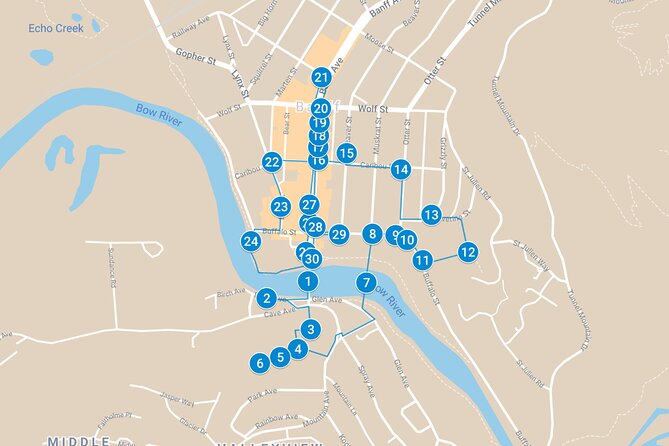
Your tour starts at 12 Banff Ave, and it quickly puts you in the “how Banff began” mode. The walking loop connects museums, old buildings, and park-era references, with a total route described as about 5 km return.
Buffalo Nations Museum: start with the big picture
Begin at the Buffalo Nations Museum. The tour frames this as your opening chapter—Banff as it is today, but also Banff as it was, through historical buildings, sculptures, and key attractions. You will also get a trivia moment as you progress, which helps turn the first few minutes into something active instead of passive.
Note on value: museum admission is not included here. If you want to go inside, budget extra time and tickets. If you just want the exterior and the audio, you still get a strong start.
Set your own pace with more self-guided routes in Banff

Banff National Park Administration Building: pause and stare
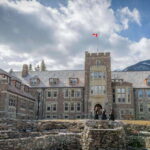
Next comes the Banff National Park Administration Building. This is one of those spots where the audio nudges you to slow down and really look at the architecture. It is a short stop, but the point is context: this is where park management connects to the town’s growth and infrastructure.
Cascade Gardens: the most time you will spend here
Then you hit Cascade Gardens, a 4-acre park built in the 1930s with gardens terraced into a hillside. The audio focuses on two pavilions: Cambrian and Devonian. Plan on lingering more here than at most stops. Even if the audio is short, the setting is made for quiet wandering and photo stops.
Drawback to consider: the tour’s timing can feel fast if you rush. Cascade Gardens is the one place where a slower pace pays off.
Pedestrian Bridge over the Bow River: Mr. Banff and the view
Crossing the Banff Pedestrian Bridge, you get a wide look over the Bow River. The tour pairs that view with a story about Mr. Banff, turning a scenic photo moment into a cultural one.
If weather is rough (and Banff can be), keep an eye on footing. The river view is worth it, but you do not want to spend more time correcting your balance than listening.
Elevation marker on Buffalo Street: a small detail with a purpose
At Buffalo Street & Muskrat Street, you are asked to find an elevation marker that looks like a coin embedded in the sidewalk. This is one of those “wait, I never noticed that” moments. The audio explains what it means, and suddenly you understand why Banff signage and measurements feel unusually precise.
Crandell Peck Cabin (514 Buffalo St): how local materials shape old Banff
At 514 Buffalo St, the tour points out the Crandell Peck Cabin, built in 1907 by Edward Henry Crandell. The key detail is that it used almost entirely locally sourced materials. That matters because it is a reminder that Banff’s early built environment wasn’t generic—it was tied to what the region could supply.
Inukshuk sighting: culture in plain sight
At Buffalo Street & Otter Street, the audio directs you to an inukshuk and explains what you are looking at. This is a quick stop, but it is the kind of moment that gives a walk its human dimension—language, meaning, and place.
Banff Powerstation (525 Buffalo St): how the town lit up
At 525 Buffalo St #521, you learn about the Banff Powerstation, which helped power streetlights and homes in 1905. It is a short audio clip, but it adds a big “how did this town work?” piece to the day.
Ken Madsen Path and Tarry-a-while residence: history you walk through
The tour moves you toward Ken Madsen Path, using the path itself to frame a bit of Banff history. Then it brings you to 117 Grizzly St, home of the Tarry-a-while residence, associated with Mary Schaffer Warren. The audio highlights her early explorations and her work documenting the Rockies through writing and paintings.
If you like stories about artists and early explorers, this is a good segment to slow down and actually read the setting around you. The audio is brief, but it points you toward deeper curiosity.
Climate talk on Otter Street: practical Banff reality
At Otter Street & Caribou Street, you get a quick explanation of Banff’s climate. This is useful because the rest of your day may depend on it. You’ll know what kind of clothing you might regret not bringing.
Luxton Home Museum: pioneer life, nine decades
Finally in this first half, you reach the Luxton Home Museum. The audio sets expectations: you see the historic home and get a glimpse into pioneer family life and Banff across nine decades.
Admission is not included, so you have a choice. If you go inside, you turn the audio into a deeper visit. If you skip it, you still get useful context for what those older neighborhoods were for.
Banff Avenue landmarks to the Legion: the town’s identity, stop by stop
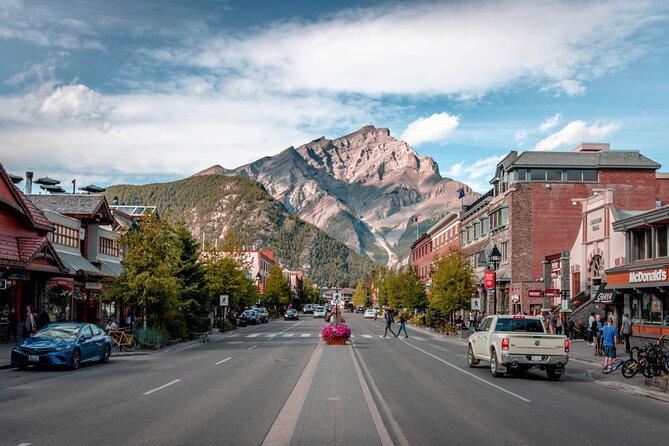
After Luxton, the tour leans harder into Banff Avenue’s built heritage and the park-centered institutions around it. Expect a lot of short “look here, notice this” moments.
Caribou Corner and the Brewster family story
At Caribou Street & Banff Avenue, you take in Caribou Corner while the audio explains when the Brewster family came to Banff in 1886 and set up shop. Even if you do not go inside anywhere, this stop helps you connect modern Banff storefronts to their early roots.
Four sentries sculpture (204 Banff Ave)
At 204 Banff Ave, you will spot the four sentries sculpture, and the audio frames why it is a mainstay. It’s a good pause if you like public art and small-town symbolism.
The Cave & Basin mural (Box 3100): why Banff became Banff
At Box 3100, the tour points out a mural on Banff Avenue depicting the Cave & Basin site. It then gives you the story behind why that matters. This is a strong “theme” stop because it ties Banff’s park origins to a visible reminder right on the avenue.
Banff Visitor Information Centre: use the walk to plan the rest
Near the end of this stretch, you pass the Banff Visitor Information Centre. The tour calls it out so you can use it to build the rest of your itinerary—especially helpful if this audio walk is your first day in town.
St. Paul’s Presbyterian Church: 1930 build, earlier beginnings
At St. Paul’s Presbyterian Church, the audio points out that the church was built in 1930, but the story starts earlier with the congregation established in 1887. It’s a quick lesson in how community institutions grow longer than the buildings do.
The fire monument at Banff Ave & Elk Street
At Banff Avenue & Elk Street, you may spot a stone fire monument. The audio explains it as a monument moment, not just a place to pose.
Cascade Lodge and the Banff Freemasons
At Caribou Street & Bear Street, the tour points out the old Cascade lodge, home to the Banff Freemasons. It’s a reminder that Banff’s social history wasn’t only about governments and parks—it was also about community groups.
Whyte Museum: Rocky Mountain culture and memory
At the Whyte Museum of the Canadian Rockies, you learn the museum’s aim: to preserve and make accessible Rocky Mountain history and culture. Admission is not included, so this is another optional depth stop. If the museum is open and you like museums, it can turn your walk into a half-day with one simple add-on.
Central Park: yes, the pile of rocks matters
In Central Park, the audio keeps it playful by calling out a big pile of rocks in the middle. The lesson here is that even “simple” features often have a story. Take a seat if you need a break—this is a walk where warming up matters.
Banff Park Museum: 1895 taxidermy collections
Next is the Banff Park Museum, tied to a National Historic Site established in 1895. The audio notes its purpose: housing taxidermy mounted specimens of animals, plants, and minerals associated with the park.
Admission is not included, so you decide if you want the inside experience. Even if you do not, the framing helps you understand why such a collection would exist in a park town.
Dave Whyte block and Harmony Lane: park-style architecture
Back on Banff Avenue, you stop at Dave Whyte block and then at Harmony Lane (107 Banff Ave). Harmony Lane is described as built in rustic National Park style, with river stone pillars. These stops are good if you like noticing design choices in plain sight.
Rundle United church: the name story (and a bit of theater)
At Rundle United (Ralph Connor Memorial United Church), the audio shares who the church is named for. One review note you might find in the audio experience is that a guide named Don does his best Mr. Rundle impersonation. It adds personality to a stop that could otherwise be just facts.
Superintendent’s Residence and what park leadership meant
At Beaver Street & Buffalo Street, you get the Superintendent’s Residence and learn about the responsibilities of the park superintendent who lived there. Again, this is a short stop, but it helps you connect how leadership decisions shaped what visitors saw (and what locals lived with).
The Banff Legion and cenotaph built in 1920
The tour finishes at the Royal Canadian Legion Col. Moore Branch 26, pointing out the Legion and the cenotaph built in front in 1920. This final stop gives a reflective note to end on, which is a nice change from ending at another storefront or photo spot.
Then you are back to the start point area, since the activity ends back at the meeting point.
When this audio walk is a great fit (and when it isn’t)
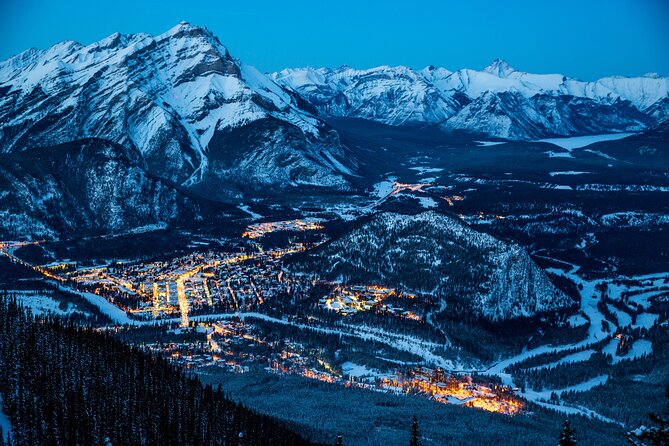
This tour is best for you if you want structure without crowds. You get a guide-style path with audio cues, but you control the pace. It is also a nice fit if you travel with one person who wants history and another who wants photos, because the route gives you both.
It is also a smart choice if you like learning as you walk. The audio does a good job turning tiny details—the elevation marker, the powerstation reference, the museum purposes—into meaning.
The main reason you might not love it is simple: app navigation and triggering behavior. If your phone struggles with GPS, or if the audio does not trigger when you expect, you can end up “wandering and guessing” for a minute or two. In that case, keep your phone’s map view open and move slowly until it locks onto your location.
Weather matters too. One practical concern: Banff winters can be brutal for walking. If you are visiting when it is bitter cold, you may end up cutting your walk short or driving between stops, which means you lose some of the audio flow.
Should you book the Sights of Banff smartphone audio walk?
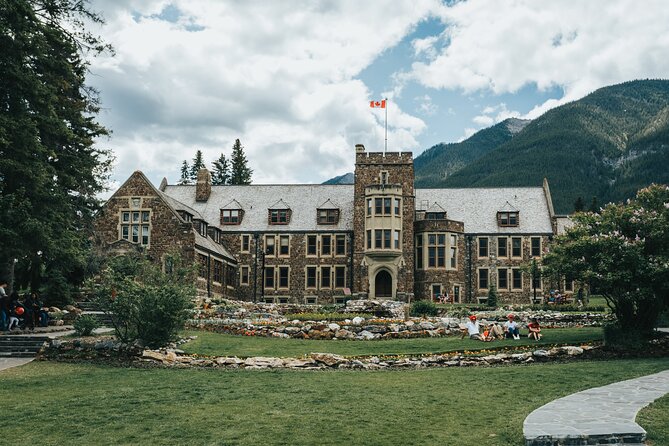
Yes, if you want an affordable, flexible way to learn Banff’s story while you explore on foot. The price is low for what you get, the audio is designed to work offline, and the stop-by-stop format makes it easy to fit into real travel days.
I’d hesitate only if you strongly prefer turn-by-turn directions every step of the way, or if you know your phone and GPS often struggle in dense downtown areas. In that case, bring a little extra patience, and consider using a map app alongside this one.
If your goal is to get your bearings and understand why Banff looks the way it does, this tour does that job quickly and with no heavy-group energy.
FAQ

How much is the Banff smartphone audio walking tour?
It costs $8.22 per person.
How long does the tour take?
It runs about 1 hour to 1 hour 30 minutes, depending on your pace.
Do I need internet or cell service during the walk?
No. You download the tour before you go, and the app can be used offline with no signal required or data used during the tour.
Can I start and stop whenever I want?
Yes. You can start at a flexible time, and you can stop and start anywhere along the route.
Do I need headphones?
Headphones are optional. The audio can also play from your device speaker.
Are attraction or museum tickets included?
No. Some stops are noted as free, but admission tickets are not included for certain attractions such as the Buffalo Nations Museum, Luxton Home Museum, Whyte Museum, and Banff Park Museum.
Where do I start, and does it end at the same place?
You start at 12 Banff Ave, Banff, AB T1L 1A1, Canada, and the activity ends back at the meeting point.
What is the cancellation policy?
You can cancel for free up to 24 hours in advance for a full refund. If you cancel less than 24 hours before the start time, the amount paid is not refunded.
A Few More Self-Guided Routes in Banff
More Town Walks & Ghost Tours in Banff
More Tour Reviews in Banff

Still scrolling? A few other Banff adventures worth a spot on the itinerary


Banff Walking & Ghost Tours, compared.
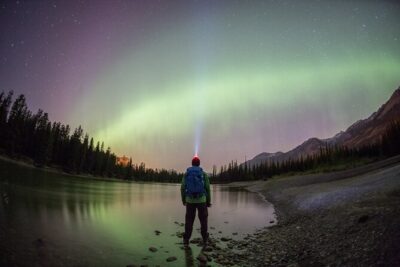 ★ 5.0The Banff Stargazing Tour – 2hr Walking TourFrom $68189 reviews
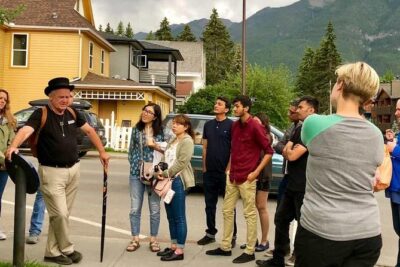 ★ 4.5Banff Ghost WalksFrom $30122 reviews
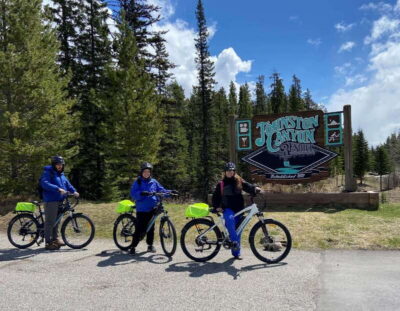 ★ 4.74-Hour E-Bike and Walking Tour in Johnston CanyonFrom $14667 reviews
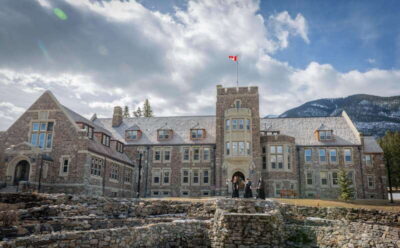 ★ 4.7Paranormal History Walking Ghost TourFrom $2946 reviews
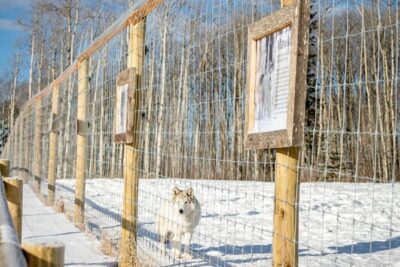 ★ 5.0Yamnuska Wolfdog Sanctuary Walk Ticket in CanadaFrom $2937 reviews
 ★ 5.0Canmore: Stargazing and Nature by Nightfall Walking Tour – 2hrFrom $6931 reviews
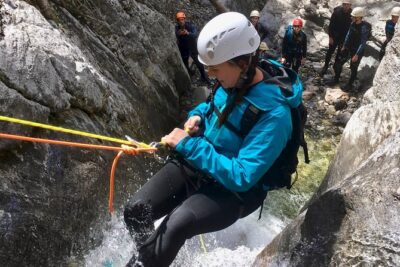 ★ 5.0Banff Canyoning – Ghost Canyon (Intermediate Level)From $22131 reviews
 ★ 5.0Canmore: Wilderness & Wildlife Tour – 2hr WalkFrom $9029 reviews
Browse the lists this tour appears in