
Reviewed · JASPER & MALIGNE LAKE TOURS
Jasper: Jasper Planetarium Dark Sky Experience
A night sky lesson in the Rockies beats a screen.
The Jasper Planetarium Dark Sky Experience is a 3-hour combo that mixes a planetarium dome theatre, telescope time, and a guided walk to a dark-sky spot for laser-led constellations and Milky Way viewing. You’ll also get Q&A with astronomy guides and learn about local Indigenous constellations, which adds meaning beyond just naming stars.
I like that it’s built as a full evening, not a quick peek. You use supplied binoculars during the constellation tour, and the format gives you more than one way to experience the sky. One caution: like most stargazing in Jasper, the quality depends on cloud cover, and if the night is cloudy you’ll likely miss some star detail even with the rain-check option.
In This Review
- Key things to know before you go
- First stop: the planetarium dome that sets your sky map
- Telescope time: what you’re really paying for at $102
- The guided walk to a dark-sky site (480 metres)
- Constellations with laser guidance and a real star map
- Binoculars: the Milky Way and deep space, hands-on
- When weather cooperates vs. when clouds steal the stars
- Who this tour is best for (and who should rethink)
- What’s included (and what’s not) so you can plan smart
- Meeting point: check in early or you’ll miss the tour
- Price and value: does $102 buy enough?
- Should you book the Jasper Planetarium Dark Sky Experience?
- FAQ
- What is the duration of the Jasper Planetarium Dark Sky Experience?
- Where do I check in for the tour?
- Is food included in the price?
- What’s included in the tour besides the planetarium?
- Are there age restrictions?
- What if the night is cloudy?
- Can I take photos or record audio during the tour?
Key things to know before you go
- Planetarium dome theatre first, so you start with the sky story even if weather turns.
- Weather-proof telescope time is part of the “combo,” so you’re not only waiting for darkness.
- A walking dark-sky site about 480 metres away keeps the night-sky viewing focused and contained.
- Laser-guided naked-eye constellations helps you build a real star map fast.
- Binoculars are provided, and you’ll use them to look at the Milky Way and deep-space targets.
- Indigenous constellations are included, so the astronomy isn’t just technical facts.
Follow the parkway up for more Jasper and Maligne Lake outings around Jasper
- Jasper: Columbia Icefield Skywalk and Ice Explorer Ticket★ 4.6 · 2,444 reviews
- Jasper National Park: Maligne Lake Cruise With Guide★ 4.7 · 896 reviews
- Jasper Evening Wildlife Tour★ 4.5 · 710 reviews
- Jasper National Park: Evening or Morning Wildlife Watch Tour★ 4.6 · 691 reviews
First stop: the planetarium dome that sets your sky map
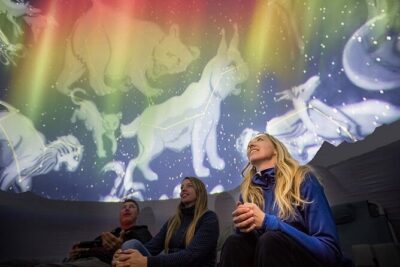
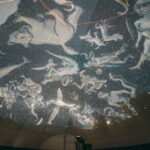
The tour starts inside the Jasper Planetarium setup at Jasper Park Lodge, with admission to their Planetarium Dome Theatre. This is your warm-up, and it matters because stargazing works best when you know what to look for before you’re standing in the dark trying to guess.
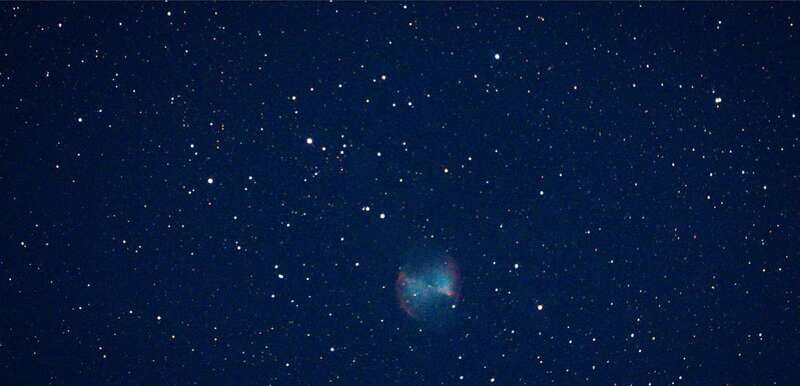
In the dome, you’ll learn about planets, nebulas, and other deep space objects, then get time for Q&A with the astronomy guides. That interactive part is a big plus for first-timers, because you can ask your practical questions right when the guide’s explanations make the most sense.
Also, a quick heads-up: children under 4 aren’t permitted in the dome theatre. If you’re traveling with kids, check ages early so you’re not stuck making a last-minute plan change.
Telescope time: what you’re really paying for at $102
At about $102 per person for a 3-hour experience, the value comes from what’s packed in: planetarium + telescope access + guided dark-sky viewing + binocular time. You’re not just paying for entry; you’re paying for guided interpretation and access to equipment you might not use well on your own.
You’ll get access to look through the optical telescopes, and the tour includes a “weather-proof” telescope experience. That phrasing is important. It suggests the staff plan for real mountain weather, where wind, fog, and passing clouds can ruin a simple stargazing session.
One practical consideration: if you’re hoping for a specific view through a specific telescope, don’t assume the exact setup will match what you imagined. What you can count on is structured telescope access and guided pointing, which is what helps your eyes actually make sense of what you’re seeing.
The guided walk to a dark-sky site (480 metres)
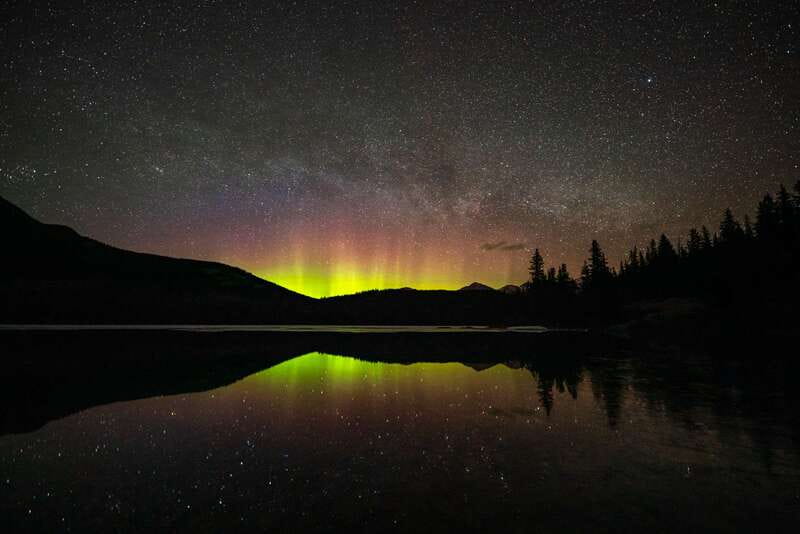
After the dome and telescope portion, you follow your dark sky guide to a specially-selected dark-sky site within walking distance—about 480 metres. This walking segment is short, but it’s still part of how the experience stays on track: you’re moving as a group so the guide can time the sky viewing with what the night is doing.
Once outside, the guide makes an announcement and begins a laser-guided tour of naked-eye constellations. This is a smart approach. Many people can’t find constellations in the dark because the sky looks like a messy scatter of points. A laser guide gives you handles—anchors you can return to with your own eyes later.
If you’re the type who wants to understand the sky like a map, this section is where it starts to click. You’re not just watching; you’re learning a route through the stars.
Constellations with laser guidance and a real star map
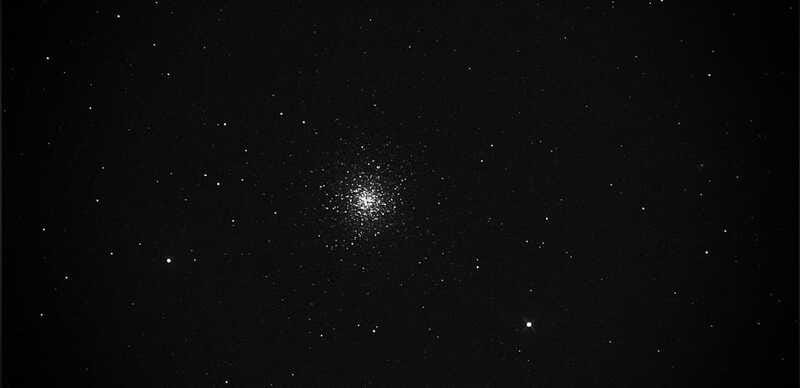
The constellation tour is built around naked-eye viewing, with laser guidance to help you connect patterns in the dark. You’ll explore deep-sky ideas like planets and nebulae from a “here’s where it is” point of view, which feels more useful than a generic slideshow.
This part also includes local Indigenous constellations, and that changes the tone. You’re getting a perspective on the night sky that’s more than western astronomy labels. Even if you already know some constellations, learning them through local cultural stories can make the whole sky feel personal and grounded in the region.
Two practical tips help you get the most from this phase:
- Wear layers so you can stand still and watch without rushing to warm up.
- Don’t expect instant results. Your eyes need a little time to adjust, especially if you’re coming in from bright areas.
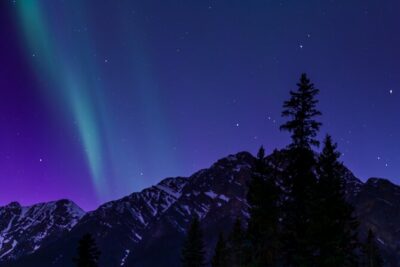
Wait for dark with more stargazing and night tours around Jasper
Binoculars: the Milky Way and deep space, hands-on
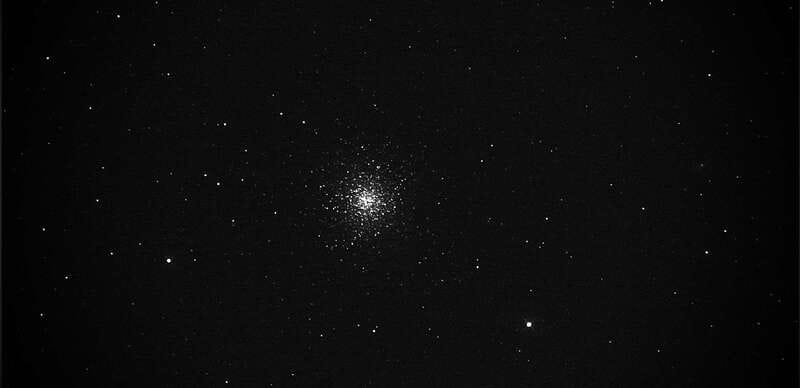
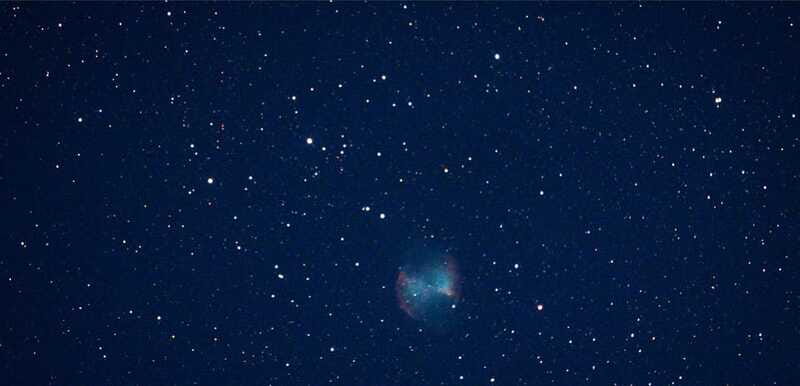
After the laser constellation tour, you move into a guided “learn together” binocular session. You’ll use binoculars provided by the tour, and you’ll be shown the Milky Way and other deep space objects you can see from the guided dark-sky site.
Binoculars are the sweet spot for many people. Telescopes can be amazing, but they often feel intimidating if you don’t know what you’re looking at. Binoculars let you find the target first, then focus on what the guide points out.
And because you’re in a group with an astronomy guide, you’re less likely to miss the moment when an object looks like a “real thing” instead of a faint dot. This is where you often start to feel the wow—not just from equipment, but from knowing what the guide is pointing at.
When weather cooperates vs. when clouds steal the stars
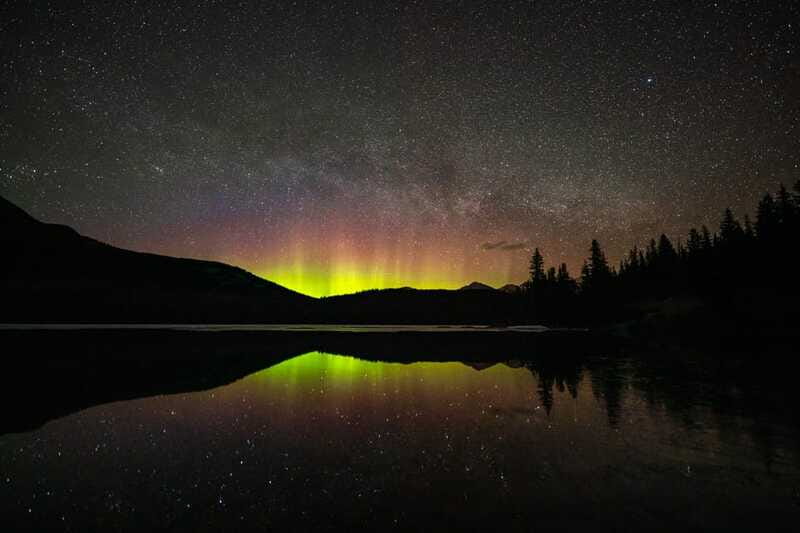
The tour is designed with weather in mind, but Jasper weather can still be a curveball. In cloudy conditions, the big challenge is reduced visibility for stars and fine details.
The itinerary includes a conditional sequence: if weather permits, you’ll enjoy a guided tour through telescopes and then continue with constellations and objects as seen through binoculars. If it doesn’t permit, the best-case scenario is that you still get planetarium learning, constellation guidance, and binocular instruction—just with fewer visible highlights.
Here’s why this still often works for value-minded travelers: the tour isn’t only about “seeing the sky at its best.” It also teaches you how to read the sky, and that learning carries over even if the night isn’t perfect.
And importantly, the experience includes a 2-year rain-check for aspects of the tour that aren’t clear the night you attend. That’s a real safety net for stargazing, where you can’t fully control cloud cover.
Who this tour is best for (and who should rethink)
This experience works especially well if you want an organized astronomy night. If you’re arriving in Jasper and thinking, How do I actually see anything meaningful?—this tour gives you structure, equipment, and guidance.
It’s also a strong choice for families with older kids and for couples. The format is open to all ages except children under 4 (due to planetarium dome restrictions), and the pace supports questions and hands-on viewing.
You should rethink it if:
- You need mobility access beyond what walking about 480 metres allows. The tour is not suitable for people with mobility impairments.
- You’re traveling with someone who can’t handle cold outdoor time, since weather-appropriate clothing is required.
What’s included (and what’s not) so you can plan smart
Included:
- Admission to the Planetarium Dome Theatre
- Access to look through optical telescopes
- Binoculars for the constellation binoculars tour
- Free parking
- Q&A with tour guides
Not included:
- Food and drink
That “no food and drink” detail matters. You’ll want to eat before you arrive, and you should plan on bringing nothing to eat during the experience. The practical win here is focus: fewer distractions while you’re watching the sky, and less mess in a cold outdoor setting.
Also note you should be ready for rules that keep the experience smooth:
- No smoking, vaping, alcohol, drugs, or intoxication.
- No photography inside and no audio recording.
Meeting point: check in early or you’ll miss the tour
This is one of those tours where timing is real. You check in for your tour at the Planetarium Retail Desk inside the Main Lodge at Jasper Park Lodge. Walk straight past the front desk; the retail desk is in the SW corner of the lobby, directly across from the Emerald Lounge.
You must check in 15 minutes before tour departure. Latecomers aren’t admitted, and you may be rebooked to the next available tour (potentially on a different day).
The good news: parking is simple. If you drive, you can park in available lots (P2 is closest to the Jasper Planetarium).
Price and value: does $102 buy enough?
For $102, you’re paying for a guided astronomy evening that includes equipment access and structured viewing time, not just “entry to a building.” The biggest value drivers are:
- Two viewing modes (planetarium + sky viewing with telescopes/binoculars)
- Guided interpretation (laser constellations + Q&A)
- A 2-year rain-check if weather blocks key portions
If you’re on a tight Jasper schedule and you want one “worth it” astronomy outing, this is a strong candidate. If you’re allergic to cold nights, then the rain-check helps, but you still need to show up and dress for it the first time.
Should you book the Jasper Planetarium Dark Sky Experience?
Book it if you want guided stargazing with real teaching built in. The combination of planetarium learning, telescope access, laser-guided constellations, and binocular time gives you more than a single “maybe we’ll see stars” moment. Add in the inclusion of local Indigenous constellations, and it becomes more than a tech demo.
Hold off or be extra realistic if your main goal is purely high-detail views every time. Cloud cover can limit what you can see, and while the tour includes a rain-check, you’ll still experience parts of the evening differently depending on the sky.
If you’re traveling with the right expectations—show up, dress warm, ask questions, and use the guide’s pointing—you’ll come away with a better sky map than you had when you arrived.
FAQ
What is the duration of the Jasper Planetarium Dark Sky Experience?
It lasts 3 hours.
Where do I check in for the tour?
Check in at the Planetarium Retail Desk inside the Main Lodge at Jasper Park Lodge, in the SW corner of the lobby, directly across from the Emerald Lounge.
Is food included in the price?
No. Food and drink are not included, and food and drinks are not allowed during the experience.
What’s included in the tour besides the planetarium?
You get access to look through the optical telescopes, and binoculars for the constellation binoculars tour, plus a Q&A with the tour guides.
Are there age restrictions?
Yes. The tour is open to all ages except children under 4, who are not permitted in the planetarium dome theatre.
What if the night is cloudy?
If aspects of the tour aren’t clear due to weather, you can use the 2-year rain-check to come back at no additional charge for those parts.
Can I take photos or record audio during the tour?
Photography inside and audio recording are not allowed.
More Stargazing & Night Tours around Jasper


More Jasper & Maligne Lake Outings from Jasper
More Tour Reviews in Jasper
Still scrolling? A few other Jasper adventures worth a spot on the itinerary

Jasper & Maligne Lake Tours, compared.
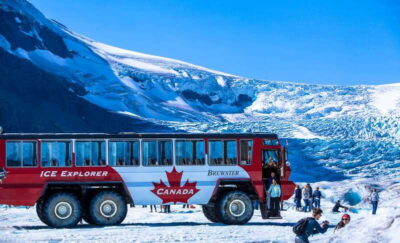 ★ 4.6Jasper: Columbia Icefield Skywalk and Ice Explorer TicketFrom $962,444 reviews
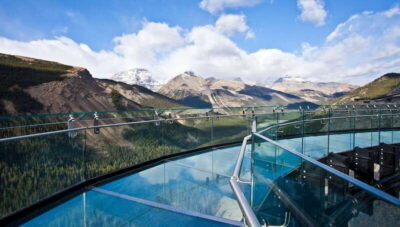 ★ 4.3Jasper: Columbia Icefield SkywalkFrom $37916 reviews
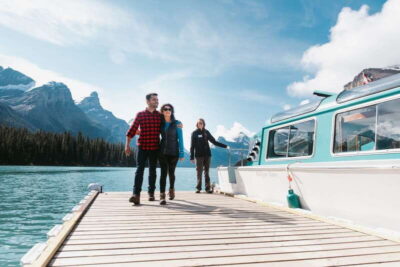 ★ 4.7Jasper National Park: Maligne Lake Cruise With GuideFrom $84896 reviews
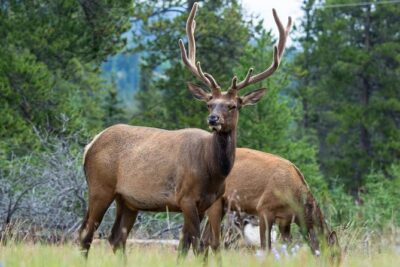 ★ 4.5Jasper Evening Wildlife TourFrom $65710 reviews
 ★ 4.6Jasper National Park: Evening or Morning Wildlife Watch TourFrom $63691 reviews
 ★ 5.0Jasper Wildlife & Sightseeing Tour with Maligne Lake CruiseFrom $176603 reviews
 ★ 4.7Jasper SkyTram Roundtrip Flight TicketFrom $59567 reviews
 ★ 4.5Maligne Lake CruiseFrom $86502 reviews
Browse the lists this tour appears in