
Reviewed · BANFF STARGAZING & NIGHT TOURS
Night Adventure with possible stargazing and Aurora chasing
Waking up at night is easy here. You get a guided mountain night in Banff National Park, with dark-sky stops, a cozy setup, and the chance to chase the aurora when conditions cooperate. I especially love the comfort part: inflatable loungers, blankets, and hot tea or hot cocoa so you can actually stay outside long enough to enjoy the sky. I also like that the guides handle the route and setup, so you’re not fumbling with navigation in the dark. The main drawback is simple: stargazing and aurora are not guaranteed, and cloud cover can limit what you see.
This is the kind of tour that turns a cold, late evening into a calm plan. You’ll ride in a passenger van or SUV, stop at several darker viewing areas, then settle in with headlamps, chairs, and a telescope to look at standout targets when the sky clears. Just keep one consideration in mind: you’ll be outdoors in temperatures down to the tour’s operating range, so you need serious cold-weather gear and patience.
In This Review
- Key highlights that make this tour worth the money
- A Banff Night Out Without the Solo-Safety Headache
- Pickup Timing and the Real Meaning of Easy Logistics
- Your Cold-Weather Checklist: What to Wear for a 2 to 4 Hour Night
- What You Get On the Ground: Loungers, Blankets, Tea, and Telescope Time
- Banff National Park at Night: Dark-Sky Stops and Guided Sky Stories
- Aurora Chasing: How to Think About It Without Getting Disappointed
- Photography Moments: Light Painting and Phone-Friendly Fun
- Price and Value: What You’re Actually Paying For
- Who Should Book This, and Who Should Skip It
- The Weather Reality Check: When You Might Reschedule or Get a Refund
- Should You Book This Night Adventure?
- FAQ
- What time does the tour start?
- How long is the stargazing portion?
- Is aurora borealis guaranteed?
- What’s included with the tour?
- Do I need a Banff National Park pass?
- What should I wear for this tour?
- Is the tour suitable for children?
- Can I bring a service animal?
- What happens if the weather is bad?
- How does group size work?
Key highlights that make this tour worth the money
- Pickup and drop-off so you avoid a stressful night drive and parking hunt
- Multiple dark-sky stops inside Banff National Park instead of one quick viewpoint
- Telescopes and warm drinks (tea and hot cocoa) so you can enjoy the sky even if you’re chilly
- Comfort-first setup with inflatable loungers, chairs, blankets, and headlamps
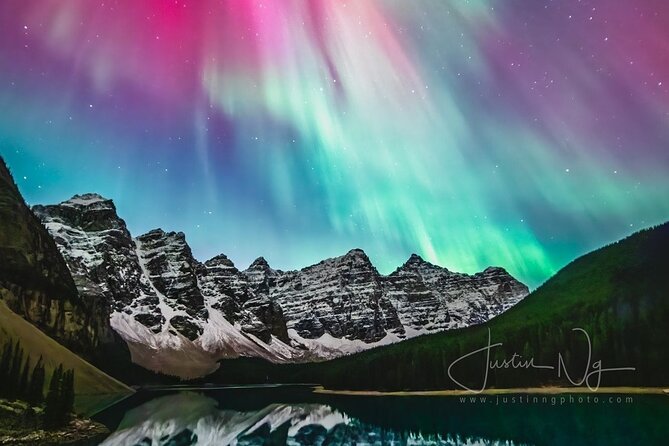
- Aurora potential, not a promise when skies align
- Small group size (max 13) for a more relaxed stargazing vibe
Wait for dark with more stargazing and night tours around Canmore
- Sunset at Moraine Lake & Stargazing Tour from Canmore/Banff★ 5.0 · 95 reviews
- Canmore: Stargazing and Nature by Nightfall Walking Tour – 2hr★ 5.0 · 31 reviews
- Canmore: Stargazing and Night Adventure★ 5.0 · 3 reviews
A Banff Night Out Without the Solo-Safety Headache
If your idea of stargazing has always sounded good… right up until you picture driving yourself on mountain roads at night, this tour solves that problem. The guiding team takes care of getting you to darker spots and setting up your observation base, so your job is mostly to stay warm and look up.
You also get the benefit of being with other people. That matters in a place like the Rockies, where the temperature drops fast and it’s easy to feel “alone out there.” Even the reviews that mention wildlife focus on the fact that safety is taken seriously, and that the guides keep everyone organized while you enjoy the view.
Now, the tradeoff: this is weather-dependent. Clear skies are ideal, but you may also face partly cloudy, mainly cloudy, or light snow conditions. The good news is that even when aurora is limited, you can still get a strong stargazing experience and telescope moments on brighter objects.
Pickup Timing and the Real Meaning of Easy Logistics
This is a tour with a start time that makes a difference: the adventure begins at 7:15 pm. Depending on when you go and where you’re staying, pickup timing changes.
For December 1 to March 7, it’s 7:15 pm from Canmore and 7:45 pm from Banff. For March 8 to April 15, the exact times are listed as TBA, so plan to confirm your specific pickup window after booking.
A useful detail: if you’re picked up in Canmore or Harvie Heights, your arrival is around the start time with a 15-minute window, and you should be ready about 10 minutes early. For Banff pickup, expect a pickup about 30 minutes after the tour start time, again with a 15-minute window. Because the group makes multiple stops, the driver may arrive slightly earlier or later.
Why you should care: stargazing tours lose their magic if you’re rushing, late, or stressed. This setup is designed to reduce that chaos, and it’s part of what makes the evening feel manageable.
Your Cold-Weather Checklist: What to Wear for a 2 to 4 Hour Night
This tour runs in real winter conditions. It operates in temperatures from -20°C to +20°C, and the actual night can include clear skies, clouds, or even light snow. That’s magical if you’re dressed right, and miserable if you’re not.
Here’s what you’ll want to wear, based on the tour guidance:
- warm winter jacket
- winter gloves or mitts
- warm hats and neck warmers
- thermal/base layers
- warm socks and boots
- snow pants (if you have them)
They strongly recommend Hothands hand and foot warmers. You can buy them in sports stores in Banff and Canmore, which is handy if you forgot yours.
Also: you may be given cleats if needed. That’s a sign this isn’t a casual stroll. You’ll be standing or sitting on uneven terrain, and winter footing matters.
And one more reality check: this isn’t recommended for children under 8. If you’re traveling with a child under 6, the tour requires a proper child safety seat (not a booster), and you need to bring your own.
What You Get On the Ground: Loungers, Blankets, Tea, and Telescope Time
Stargazing tours can go one of two ways: either you’re bundled up and comfy, or you’re trying to survive while your fingers go numb. This one aims for the comfy option.
Once you reach your spots, the team sets up a comfortable base with:
- inflatable loungers for sky watching
- chairs and blankets
- headlamps so you can move safely without killing your night vision
- hot chocolate and tea to warm up
- telescope use
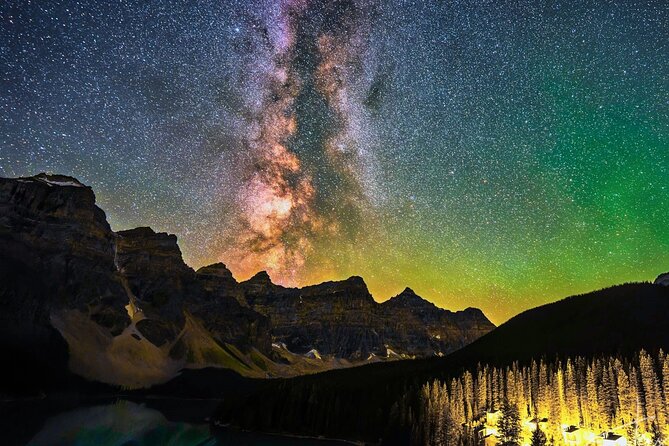
The telescope part is a big deal. When skies cooperate, it turns the sky from “pretty dots” into something you can actually study. Reviews highlight seeing planets and even details like Jupiter’s moons, plus the Milky Way when skies are clear. You shouldn’t expect miracles every night, but the setup is clearly built for serious viewing.
Comfort also helps you slow down. You stop checking your phone every few minutes. You actually give your eyes time to adjust, and that’s when constellations and faint stars become easier to spot.
Make an evening of it with more after-dark picks around Canmore
Banff National Park at Night: Dark-Sky Stops and Guided Sky Stories
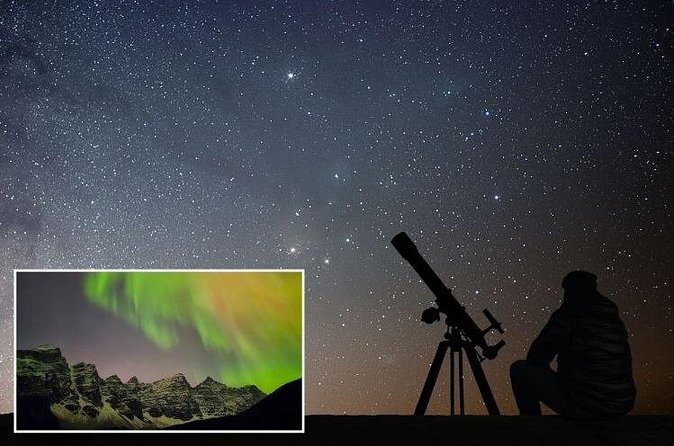
Your main stop is Banff National Park, and the whole evening is built around the idea of finding darker locations away from modern distractions. The plan calls for exploring several hidden locations across the mountains, not just one quick pull-off.
In practice, that means a rhythm:
1) ride out under the night sky
2) move to a viewing spot that offers better darkness and sky conditions
3) set up your observation base
4) look, listen, and re-check the sky as it changes
The guide work matters here. You’re not left alone to figure everything out. The tour includes astronomy-style interpretation, like identifying what you can see and helping you make sense of the sky. Reviews also mention guides sharing stories about local flora and fauna, and even bear-safety awareness. That’s a helpful reminder: it’s dark out there, you may encounter wildlife, and the responsible way to enjoy it is to follow the guide’s rules.
So even on a night that’s mostly cloudy, you’re not “just standing around.” You’ll still have warm drinks, a comfortable setup, and guided help turning the night into something you can experience, not just endure.
Aurora Chasing: How to Think About It Without Getting Disappointed
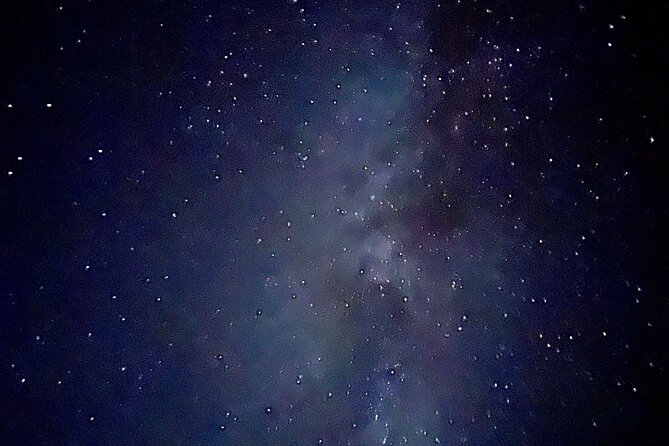
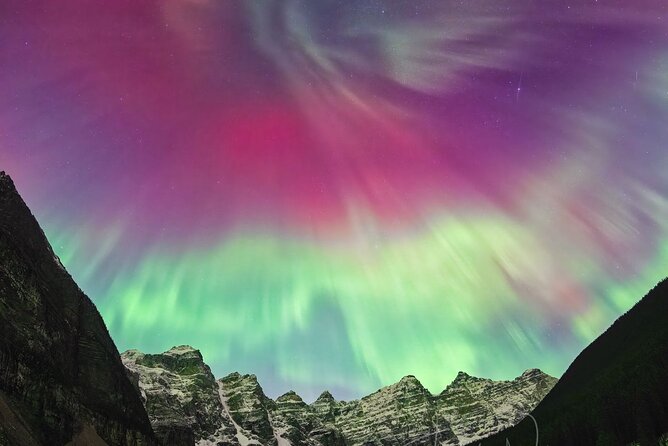
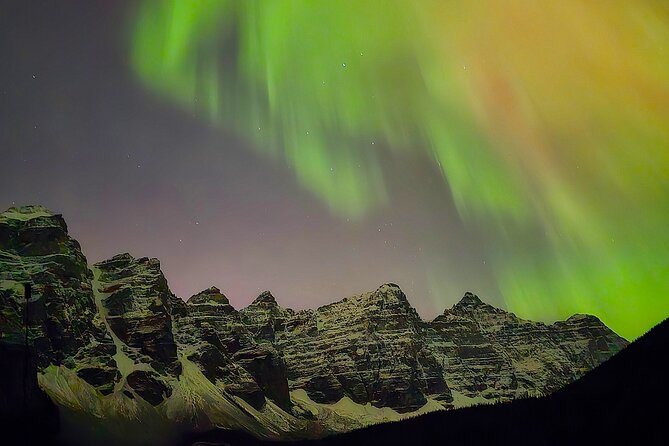
This tour includes possible aurora chasing, but it’s honest about the key point: aurora sightings are not guaranteed. That’s not a marketing trick—it’s physics. Solar activity varies, and clouds can erase your view even when aurora is present.
What you can do is adjust your expectations. Think of the aurora as a bonus. The core product is a guided dark-sky stargazing evening with telescope time, and that part still has value when the aurora doesn’t show up.
If you do get aurora, that’s where the multiple stops and the “dark skies” goal help. You’re giving yourself more opportunities to find the right conditions during the night.
And if you don’t, you can still end up with a great sky experience—especially on nights with clear patches or light snow, where the winter air can make stars look sharper.
Photography Moments: Light Painting and Phone-Friendly Fun
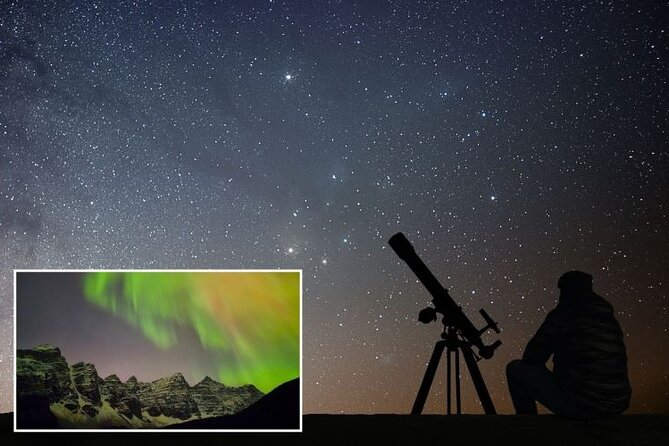
One review mentions a surprise activity you can capture on smart phone cameras, plus a fun light-painting element. Even if you’re not a serious photographer, that matters because it adds a little play into the waiting time.
A practical approach:
- keep your phone accessible, but protect it from cold
- expect you’ll want to use it briefly, then return to looking up
- don’t rely on your screen brightness to ruin your night vision—use it in short bursts
Also remember: winter nights are long. The fun moments help you stay engaged while you wait for the sky to clear.
Price and Value: What You’re Actually Paying For
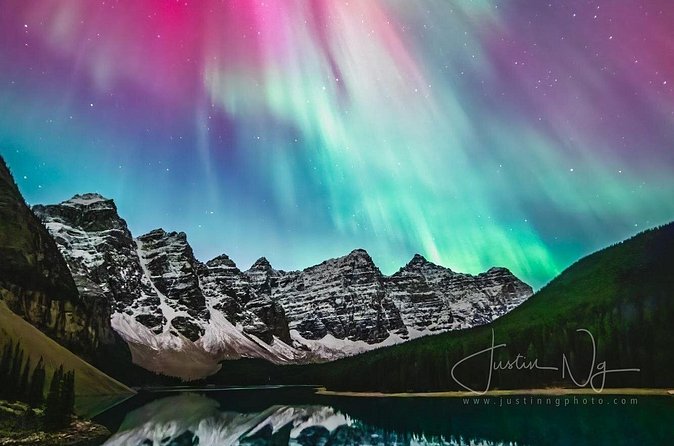
The price is $111.84 per person for a 2 to 4 hour experience (often described around 2.5 to 3.5 hours). The value isn’t just the telescope. It’s the total package of help that removes friction.
Here’s what you typically get included:
- transportation with a passenger van or SUV
- hot chocolate and tea
- telescope use
- blankets, chairs, and inflatable loungers
- headlamps (so you move safely in the dark)
- cleats if needed
- mobile ticket, English-speaking guides
Not included:
- food
- Banff National Park Pass
So the big question is: is it worth it versus DIY? If you’re not comfortable driving to dark areas at night, or you don’t want to carry winter gear and figure out where to go, then yes, this is strong value. You’re paying for transportation, planning, and comfort.
One more note: the tour runs with a maximum of 13 travelers. That size tends to keep things organized without feeling like a cattle-car. For a stargazing activity, that’s a plus.
Who Should Book This, and Who Should Skip It
This is a great fit if you want:
- guided stargazing without night-driving stress
- a comfortable setup for cold outdoor time
- telescope viewing plus guidance on what you’re seeing
- a small-group experience with pickup and drop-off
It’s less ideal if:
- you want guaranteed aurora (that guarantee doesn’t exist here)
- you struggle with cold and don’t plan to dress for it
- you’re traveling with children under 8 (not recommended)
If you’re a solo traveler uneasy about going out at night, this format is especially helpful. You’re not handling navigation or setup. You’re simply showing up, bundling up, and letting the guides do the hard part.
The Weather Reality Check: When You Might Reschedule or Get a Refund
The tour runs in a wide range of sky conditions: clear skies, partly cloudy, mostly cloudy, cloudy periods, and even light snow. If rain or heavy snow shows up, you’re offered the option to reschedule or receive a full refund, depending on how conditions play out.
In other words, you’re not locked into a bad-weather night no matter what. But you also shouldn’t book this last-minute hoping the clouds will magically disappear.
Should You Book This Night Adventure?
I think you should book it if you want a guided Banff night that’s built for comfort and real stargazing time, not just a quick stop with cold fingers. The combination of warm drinks, blankets, inflatable loungers, telescope use, and pickup/drop-off makes it feel practical—like someone planned your evening instead of hoping for the best.
Hold off only if your main goal is guaranteed aurora. Since sightings aren’t promised and clouds can block views, the best mindset is to treat the aurora as the bonus and the stargazing as the main event.
If you choose to go, pack like it’s winter outside (because it is), and show up ready to look up for a while. That’s when this tour pays off.
FAQ
What time does the tour start?
It starts at 7:15 pm. For December 1 to March 7, pickup is 7:15 pm from Canmore and 7:45 pm from Banff. For March 8 to April 15, pickup details are listed as TBA.
How long is the stargazing portion?
The tour is about 2 to 4 hours, with additional info noting it runs around 2.5 to 3.5 hours.
Is aurora borealis guaranteed?
No. Aurora Borealis sightings are not guaranteed.
What’s included with the tour?
You get hot chocolate and tea, telescope use, headlamps, blankets, inflatable loungers, chairs, and transportation in a passenger van or SUV.
Do I need a Banff National Park pass?
Yes, the Banff National Park Pass is not included.
What should I wear for this tour?
Wear warm hats, mitts/gloves, neck warmers, winter jackets, snow pants, thermal/base layers, warm socks, and boots. Hand and foot warmers like Hothands are strongly recommended.
Is the tour suitable for children?
It’s not recommended for children under 8. If a child is under 6, they must be seated in a proper child safety seat that you provide.
Can I bring a service animal?
Yes, service animals are allowed. You should let the provider know in advance if you’re coming with a service dog.
What happens if the weather is bad?
The tour can be rescheduled or you may receive a full refund if weather conditions are rain or heavy snow. You may also be offered a different date.
How does group size work?
The tour runs with a minimum of four guests. If that minimum isn’t met, you’ll be offered an alternative date, a different service, or a refund. The tour also has a maximum of 13 travelers.
A Few More Evening Outings around Canmore
More Stargazing & Night Tours around Canmore
More Tour Reviews in Canmore

Still scrolling? A few other Canmore adventures worth a spot on the itinerary
Banff Stargazing & Night Tours, compared.
 ★ 4.9Guided Sunset and Stargazing TourFrom $66262 reviews
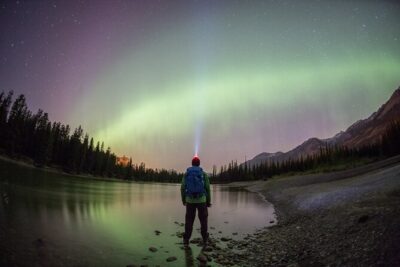 ★ 5.0The Banff Stargazing Tour – 2hr Walking TourFrom $68189 reviews
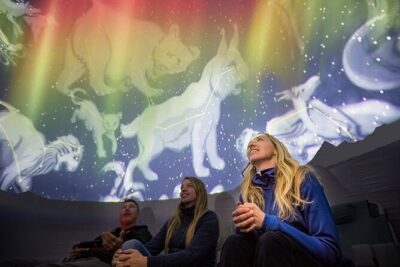 ★ 4.0Planetarium and Telescope Combo TourFrom $68144 reviews
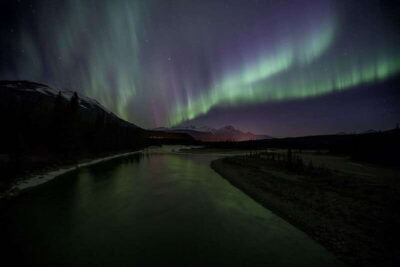 ★ 3.8Jasper: Jasper Planetarium and Telescope Combo Tour TicketsFrom $61118 reviews
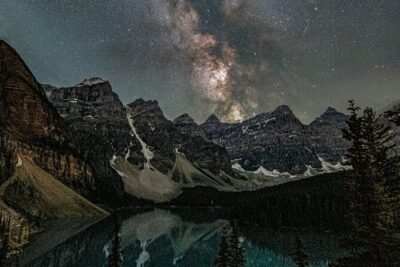 ★ 5.0Sunset at Moraine Lake & Stargazing Tour from Canmore/BanffFrom $9795 reviews
 ★ 4.6Banff OR Moraine Lake: Night Tour with possible StargazingFrom $10883 reviews
 ★ 4.7Sunrise or Sunset/Stargazing Tour at Moraine Lake from BanffFrom $9850 reviews
 ★ 5.0Canmore: Stargazing and Nature by Nightfall Walking Tour – 2hrFrom $6931 reviews
Browse the lists this tour appears in