
Reviewed · ICEFIELDS PARKWAY & COLUMBIA ICEFIELD
Guided Glacier Hike on The Athabasca with IceWalks
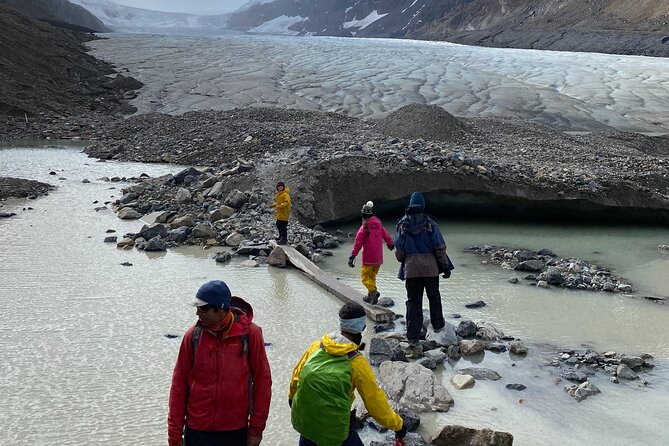
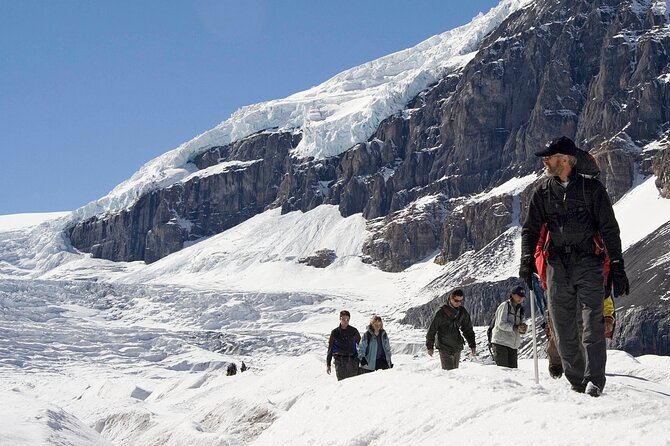
Walking on a glacier sounds unreal. This is one of the most direct ways to experience the Athabasca Glacier in Jasper’s Canadian Rockies, with guides taking you across real ice formations you’d normally only see from a distance. You’ll learn to spot crevasses and meltwater features while staying on safe footing—no climbing experience required.
I like that it’s a small-group hike (up to 12), so the guide can keep track of your pace and questions. I also like the practical gear setup, especially micro-spikes for traction, plus walking sticks if you need them. The main drawback is that this moderate walk can feel more strenuous than expected for some people, and it’s not suitable if you have specific heart, lung, or mobility concerns.
In This Review
- Glacier Hike Highlights You’ll Actually Feel
- Getting Set Up at the Columbia Icefield Area
- Your Athabasca Glacier Walk: What the 3 Hours Feels Like
- Ice Formations You Can See Up Close (Not Just Believe Exist)
- Gear, Traction, and the Things That Actually Matter
- Quick packing checklist (based on what the tour expects)
- Pace, Fitness Level, and Who This Glacier Hike Fits
- Medical notes you should take seriously
- Who will love it most
- Price and Value: Is $98.89 Worth It?
- Weather, Safety, and What to Do When Conditions Change
- After You Walk: Make the Most of the Jasper Icefield Day
- Should You Book IceWalks on the Athabasca Glacier?
- FAQ
- How long is the IceWalks guided glacier hike on the Athabasca?
- How far do we walk?
- Is technical climbing required?
- What’s included in the price?
- What should I bring with me?
- What group size is it?
- Where do we meet the guide?
- Who can take this tour?
- Are service animals allowed?
- What happens if weather is bad?
- What’s the cancellation window?
Glacier Hike Highlights You’ll Actually Feel
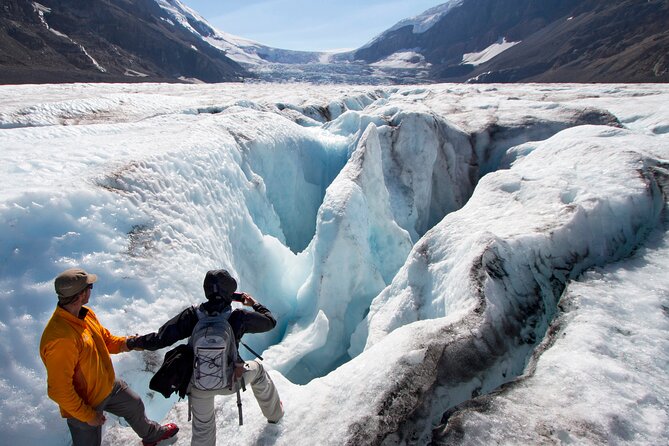
- Up-close glacier time: a 5 km roundtrip walk onto the Athabasca Glacier surface
- ACMG-certified guidance: interpretive explanations geared to non-climbers
- Traction gear included: micro-spikes for walking on ice, not just photos from a lookout
- Ice features you can point at: crevasses, mill wells, meltwater streams, and icefalls
- Small group pace: max 12 travelers, with stops for safety and explanations
Keep heading north for more Icefields Parkway and Columbia Icefield trips around Jasper
- Jasper: Columbia Icefield Skywalk and Ice Explorer Ticket★ 4.6 · 2,444 reviews
- Guided Glacier Hike on The Athabasca with IceWalks★ 5.0 · 334 reviews
- Columbia Icefield Tour with Glacier Skywalk from Jasper★ 4.5 · 184 reviews
- Columbia Icefield Skywalk Admission★ 4.0 · 142 reviews
Getting Set Up at the Columbia Icefield Area
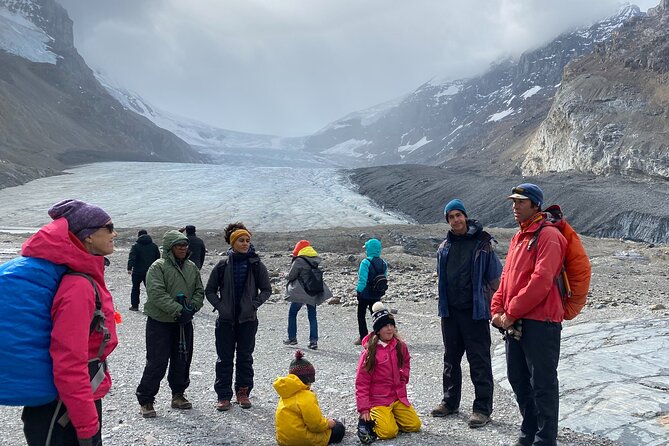
Your tour starts at the Columbia Icefield Discovery Centre parking lot, where IceWalks guides meet you and gear you up. You’ll get shuttled a short distance to the trailhead, which helps you spend your energy on the hike instead of transit.
This is a big deal for value. In a lot of mountain activities, time gets eaten by driving, parking, and long introductions. Here, you get equipped first, then you move onto the glacier route.
Guides are ACMG certified, and you’ll be led by an interpretive, safety-first approach. In past groups, I’ve seen the experience delivered by guides like Mike, Stu, Ana, Troy, Nick, Larry, Tom, and Rupert, and the consistent theme is clear: you’ll be taught what you’re looking at, plus how to walk on changing ice conditions without panic.
Your Athabasca Glacier Walk: What the 3 Hours Feels Like
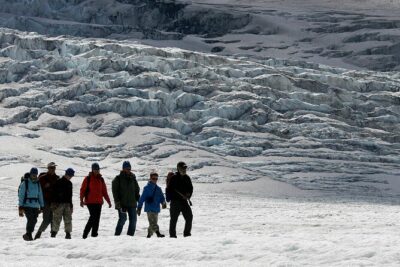
Expect about 3 hours total (approx.). The core walking time is a 5 km roundtrip route that takes you onto the Athabasca Glacier and through the icefield’s signature terrain. Along the way, your guide will stop the group to explain how the glacier works and what specific formations mean.
The itinerary is simple on paper, but it’s not just a “walk and look” outing. The guide is actively teaching you to read the ice: where it’s stable enough to step, where meltwater runs, and how different features form.
One practical note from real experiences: the trek to the glacier surface can be a bit more effort than people anticipate. Even so, the tour is commonly described as moderate, with frequent pauses for explanation and regrouping. If you’re comfortable hiking on uneven ground and you don’t mind cool, slippery footing, you’re in the right zone.
Ice Formations You Can See Up Close (Not Just Believe Exist)
One of the best parts of glacier walking is that your brain stops treating the ice as scenery and starts treating it as a working environment. This tour helps you do that fast.
Here’s what you’ll have a chance to spot on the glacier:
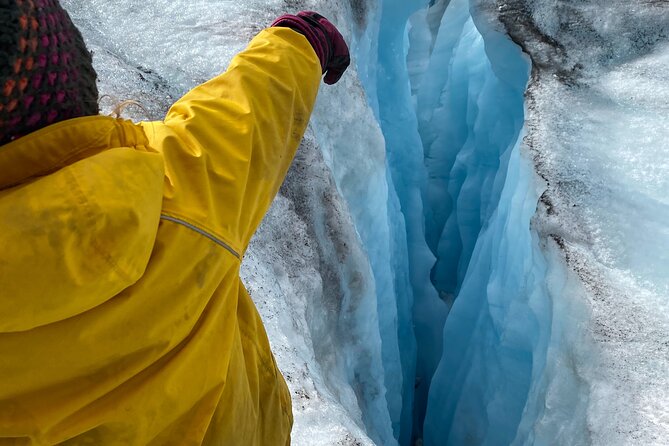
- Crevasses: cracks in the ice that show you how dynamic the glacier is
- Mill wells: vertical shafts where water drops into the depths
- Meltwater streams: running water channels that change the ice surface
- Icefalls: areas where ice flows over steeper sections
Your guide will point these out and tie them to what you can observe right in front of you. That’s where the interpretive part matters. You’re not just getting “cool pictures.” You’re learning what each feature indicates about movement, melt, and gravity-driven flow.
If you learn best by asking questions, you’ll likely enjoy the format. Many guides on this route are described as funny, engaging, and good at keeping everyone moving while still giving you the story.
Gear, Traction, and the Things That Actually Matter
IceWalks provides micro-spikes, which are traction devices designed to help you walk on ice safely. Even if you’re an experienced hiker, this matters because glacier surfaces can be icy and uneven in ways you can’t always predict from one step to the next.
If you don’t have your own gear, the tour notes also encourage (or provides guidance on) items like:
- rain gear
- hiking boots
- gloves and a hat
Warm layers are not included, so bring your own insulating layer. Weather in the Icefield area can shift quickly, and you’ll want to trap heat without overheating when you start climbing.
A small but important detail: some guides provide walking sticks that can make a difference when you’re managing traction and balance. You might not think you need them, but if the ground feels steep or slick, you’ll be glad they’re available.
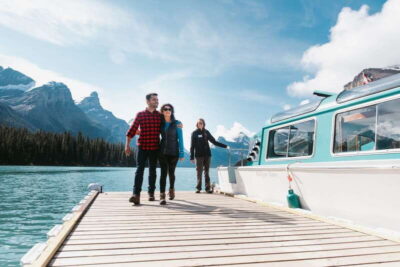
Let a mountain local lead the way on more guided outings in Jasper
Quick packing checklist (based on what the tour expects)
- rain layer
- warm layer
- gloves + hat
- hiking boots
- plan for wet and cold conditions
Pace, Fitness Level, and Who This Glacier Hike Fits
This is described as moderate. It’s also noted as a fit for young children and active seniors, which tells me the operators know how to scale pace with a group. That said, the walk to the glacier is not a flat stroll.
So I’d frame it this way: you should book if you can handle a moderate hike on uneven terrain and keep a steady pace for a couple of hours outdoors. You should also be ready for brief stops while the guide teaches features and checks footing.
Medical notes you should take seriously
The tour is not suitable for people with medical issues specifically related to:
- heart
- lungs
- mobility
If any of that applies to you, don’t “test it” on this outing. Ask your doctor first and consider alternative glacier viewing options that don’t involve walking on ice.
Who will love it most
- people who want real glacier access, not just a viewpoint
- families with kids who can hike at a steady moderate pace
- active seniors who don’t have mobility limits and can manage traction gear
- anyone who likes learning through direct observation
Price and Value: Is $98.89 Worth It?
At $98.89 per person, you’re paying for three things: (1) the glacier walking experience itself, (2) guide expertise and safety management, and (3) included traction equipment (micro-spikes) plus the interpretive element.
If your goal is to spend actual time on the ice while learning what you’re seeing, this price is easier to justify. You’re not paying for a short photo stop. You’re paying for guided movement across about 5 km roundtrip on the Athabasca Glacier, with a maximum of 12 people in the group.
That small group size can affect comfort and safety. With fewer people, the guide can slow down when the terrain demands it and keep everyone together during explanation stops.
I’d say it’s good value if you’re the type who wants the “how does this place work” story, not just the “I was there” stamp. If you’re mostly looking for a quick scenic view with minimal exertion, you might find it more effort than you want.
Weather, Safety, and What to Do When Conditions Change
This experience requires good weather. If conditions are poor, the tour can be canceled, and you’ll be offered a different date or a full refund. That’s a fair trade for an activity that takes place on real ice.
From a safety perspective, the tour is built for non-climbers. You don’t need technical climbing skills, and the guide’s job is to manage safe routing while educating the group. Still, you should show up ready to walk carefully and follow guidance on footing.
If rain happens (and it can happen in the Rockies), your rain gear matters. If you get cold, warm layers matter. If you don’t trust your balance, traction gear and walking sticks can help you feel steadier.
After You Walk: Make the Most of the Jasper Icefield Day
Once you’re done, you’ll return to the original meeting point area. From there, you’re in a prime zone for more Icefield sightseeing in Jasper’s broader Columbia Icefield area.
If you have energy, plan a low-stress continuation. If you’re tired, treat the rest of the day as recovery. Glacier walking can be surprisingly tiring because careful steps and cold air both add up.
A practical tip: many people pair this kind of hike with a meal soon after. One commonly recommended idea is to eat at Altitude afterward, which is the kind of simple plan that helps you avoid rushing while you’re still cold and hungry.
Should You Book IceWalks on the Athabasca Glacier?
Book this tour if you want true glacier access with traction included, a guide who explains what you’re seeing, and a group size small enough to feel supported. It’s also a smart choice if you like hands-on learning, because the ice features are part of the main event, not an afterthought.
Skip it or look for a different option if you have heart, lung, or mobility concerns, or if moderate hikes feel tough for you. Also, go in with realistic expectations: the walk can be more strenuous than a casual stroll, and you’ll be outdoors in cold, changing weather.
If those boxes work for you, IceWalks is the kind of experience that turns a famous glacier into a place you can actually stand on and understand.
FAQ
How long is the IceWalks guided glacier hike on the Athabasca?
The tour is about 3 hours (approx.).
How far do we walk?
It’s a 5 km roundtrip walking tour onto the Athabasca Glacier.
Is technical climbing required?
No technical climbing experience is required.
What’s included in the price?
Your admission ticket is included, and you’ll be provided micro-spikes for traction on the ice.
What should I bring with me?
Bring warm layers, plus items like rain gear, hiking boots, gloves, and a hat (the tour also notes these items if you don’t have your own).
What group size is it?
It’s a small-group tour with a maximum of 12 people.
Where do we meet the guide?
You meet the ACMG certified guides at the Columbia Icefield Discovery Centre parking lot.
Who can take this tour?
You should have a moderate physical fitness level. It’s not suitable for people with medical issues related to heart, lungs, or mobility.
Are service animals allowed?
Yes, service animals are allowed.
What happens if weather is bad?
The experience requires good weather. If it’s canceled due to poor weather, you’ll be offered a different date or a full refund.
What’s the cancellation window?
You can cancel for a full refund up to 24 hours in advance. If you cancel less than 24 hours before, you won’t get a refund.
A Few More Guided Tours around Jasper
More Icefields Parkway & Glacier Runs from Jasper
More Tour Reviews in Jasper
Still scrolling? A few other Jasper adventures worth a spot on the itinerary
Icefields Parkway & Columbia Icefield, compared.
 ★ 4.6Jasper: Columbia Icefield Skywalk and Ice Explorer TicketFrom $962,444 reviews
 ★ 4.5Columbia Icefield Tour with Glacier SkywalkFrom $991,860 reviews
 ★ 4.3Jasper: Columbia Icefield SkywalkFrom $37916 reviews
 ★ 5.0Lake Louise, Moraine Lake and the Icefields Parkway Full-Day TourFrom $165836 reviews
 ★ 5.0Columbia Icefield Tour with Glacier Skywalk from BanffFrom $302649 reviews
 ★ 4.8Columbia Icefield, Skywalk, Crowfoot Glacier, and Lakes TourFrom $50475 reviews
 ★ 4.8From Banff: Athabasca Glacier and Columbia Icefield Day TripFrom $276408 reviews
 ★ 5.0Athabasca Glacier Snow Trip from BanffFrom $291394 reviews
Browse the lists this tour appears in