
Reviewed · YOHO & EMERALD LAKE TOURS
Emerald Lake,Natural Bridge, Wapta Falls & Takakkaw Falls in Yoho
Yoho’s turquoise-to-emerald colors make this day feel cinematic. You’ll spend a long morning in the Banff area, then head west for iconic Yoho waterfalls and glacial lakes, with timed stops and admission handled for you. I like that the tour builds in real variety (still water, rock formations, then waterfalls), and I also like that the guides focus on the practical stuff: where to stand and how to keep your day moving without rushing.
The one thing to think about is the physical side: Wapta Falls includes a 4 km round trip hike, and conditions can be slippery or mosquito-heavy depending on weather. If you’re picky about slow walking, or you want zero stairs/uneven ground, plan around that.
In This Review
- Key points before you go
- Banff to Yoho: a big-day route that actually works
- The Banff morning: quick hits that set the mood
- Emerald Lake: why the water looks unreal
- Natural Bridge: Kicking Horse power, with a winter twist
- Wapta Falls: the 4 km hike that’s worth planning for
- What matters for your comfort
- The guide factor (and why it shows)
- Winter note
- Lake Louise (winter): a glacial “ice wonder” moment
- Field lunch hour: the simple break that keeps energy up
- Takakkaw Falls (summer): tall, reachable, and camera-friendly
- The catch: mosquitoes in warm months
- Winter swap
- Marble Canyon (winter): crampons, blue river contrast, and short walks
- Price and value: what you’re really paying for
- What to pack for a day around Yoho’s water
- Who this tour is best for
- Should you book it? My decision guide
- FAQ
- How long is the tour, and when does it start?
- What language is the tour offered in?
- Is admission included for the stops?
- Do I need to hike?
- What happens in winter instead of Wapta and Takakkaw Falls?
- Is there winter gear included?
- How big is the group?
Key points before you go
- Rock flour magic at Emerald Lake: that famous green comes from tiny glacial debris particles.
- Natural Bridge changes in winter: when it freezes, you may get an icewalk onto the frozen Kicking Horse River.
- Wapta Falls is the hike stop: 4 km round trip, plus the view depends on safe footing.
- Takakkaw is easy to reach in summer: a short 10 to 15 minute walk from the car park, but mosquitoes can still be an issue.
- Guides actively manage weather and photos: some guides adjust plans or swap activities when conditions aren’t great.
- Small group size: up to 14 travelers means you’re not fighting for a viewing spot.
Slip over the divide for more Yoho and Emerald Lake trips from Banff
- Lakes Moraine, Louise, Emerald, Johnston Canyon & Yoho Tour★ 4.8 · 1,023 reviews
- Banff: Lake Louise, Moraine, Emerald Lake & Johnston Canyon★ 4.9 · 808 reviews
- Day Trip: Lake Louise, Moraine Lake, Emerald Lake, Banff★ 4.5 · 680 reviews
- Banff: Moraine Lake, Lake Louise, Emerald Lake and Yoho Trip★ 4.8 · 272 reviews
Banff to Yoho: a big-day route that actually works
This is a full-day drive built for one purpose: seeing the best water-and-mountain scenes in and around Yoho, without you needing to plan five separate parking lots. The day starts early (7:30 am) and runs about 8 to 10 hours including travel time. You’ll ride in an air-conditioned vehicle, and you get water on board (plus hot drinks in winter).
The pacing matters. You’re not stuck staring at a bus schedule; you’re moving through a string of highlights—first the Banff lookouts, then the Yoho glacial lakes and waterfalls—so you get a clear “story” to the day rather than random sightseeing.
And because the max group size is 14, you’ll usually have enough space for photos at the stops where timing gets tight.
The Banff morning: quick hits that set the mood
Before Yoho, the tour typically swings past the Banff-area classics. Think big mountain backdrops and lake reflections you can’t really fake with a phone filter.
You’ll make stops linked to places like Cascade Mountain, Vermilion Lakes (the three-lake viewpoint with Mount Rundle reflections), and Castle Mountain. These are short, visual pauses—less about hiking, more about orientation. It’s the kind of early reset that helps the later Yoho sights feel even more dramatic.
If you like starting your day with wide-open views, this portion is a nice warm-up.
Emerald Lake: why the water looks unreal
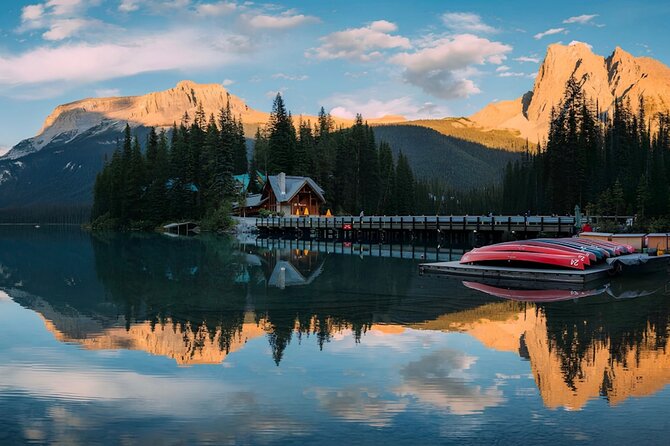
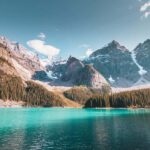
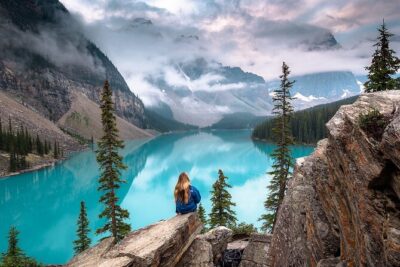
Emerald Lake is the anchor stop in Yoho National Park, and the reason you’ll remember it is simple: the water’s green color comes from tiny glacial debris particles called rock flour. That’s the science behind the “how is this even real?” look.
The stop time is about 30 minutes with admission included. That’s enough time to:
- find a comfortable viewpoint
- take photos without sprinting
- just breathe for a moment in the quiet of the lake basin
In winter, the lake can be largely frozen, and the surrounding area may be covered with untouched snow. In other seasons, it’s more about the contrast—green water in front of snow-capped Rockies.
A small practical tip: treat this as your “easy win” stop. After Emerald Lake, the day shifts into a more active rhythm with waterfalls and uneven ground.
Natural Bridge: Kicking Horse power, with a winter twist
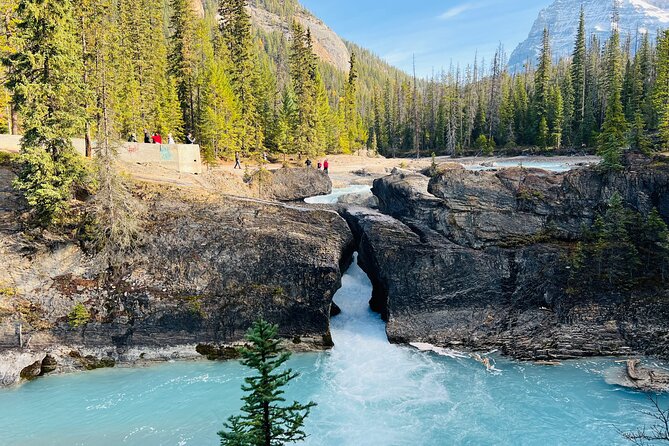
Next up is Natural Bridge near Field, where the Kicking Horse River squeezes through an impressive rock formation. The tour keeps this stop short (about 15 minutes), but Natural Bridge is the kind of place where a quick arrival works—if you’re positioned well.
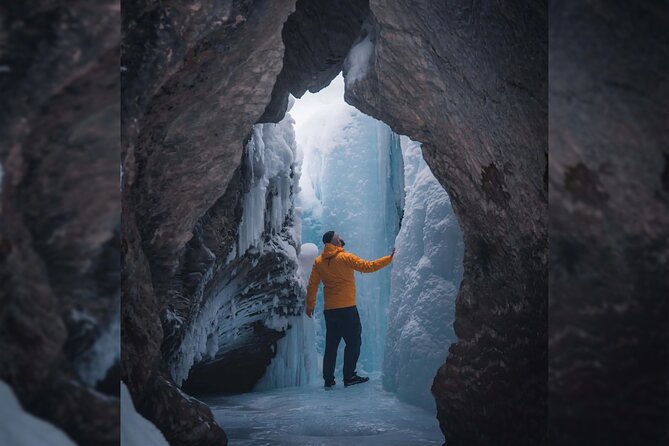
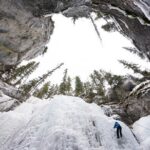
The big reason people talk about it is the winter transformation. When the waterfall freezes, you may be able to walk onto the frozen Kicking Horse River using ice spikes/crampons (winter gear is included). Seeing the Natural Bridge from below changes the whole feeling of the site; it’s more up-close and more dramatic than a standard “stand and look” view.
In summer, you’re mostly getting the geologic spectacle from the usual viewpoints, without the icewalk angle. Either way, it’s unusual enough to feel like more than just another waterfall stop.
Wapta Falls: the 4 km hike that’s worth planning for
Wapta Falls is one of Yoho’s headline waterfalls and the tour treats it as the main active moment. In summer, Wapta Falls is included, with about 2 hours for the stop area and a 4 km round trip hike.
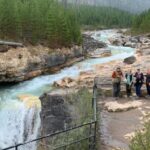
Wapta Falls itself drops 18 meters high and stretches about 107 meters wide on the Kicking Horse River. That width is what gives it presence even from a distance—you’re not looking at a narrow ribbon.
What matters for your comfort
- The hike is round trip and includes elevation changes, so it’s more than a flat nature walk.
- Weather can change the experience fast. Rain or slick surfaces can make the area near the falls harder to navigate.
- The group size helps here: you’re not moving through the trail like cattle.
The guide factor (and why it shows)
Guides on this tour have a reputation for practical help at Wapta Falls. I like that they don’t just tell you what you’re seeing; they actively manage the day. For example, when conditions were rainy, a guide suggested a safer, more secluded viewing option for Wapta Falls rather than pushing everyone right near the slipperiest parts of the area. Another approach used was to swap in scenic additions like Bow Lake and Peyto Lake when the original plan wasn’t as comfortable.
So if you’re the kind of traveler who values smooth execution, this is where you’ll notice it.
Winter note
Wapta Falls becomes a winter swap—it changes to Lake Louise or Lake Louise Ski Resort depending on the season. That matters because you’ll still get that “glacial-water-and-mountain-backdrop” vibe, but the day’s walking intensity may differ.
Lake Louise (winter): a glacial “ice wonder” moment
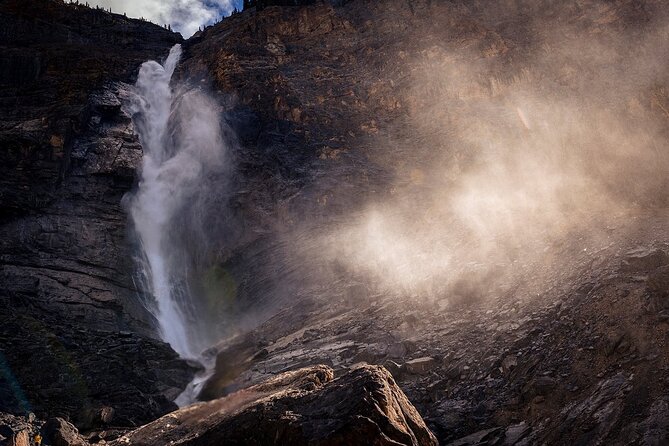
In winter, the tour’s focus adjusts. Lake Louise is the seasonal replacement for Wapta Falls, and the emphasis is on the lake’s icy transformation. Expect a short stop (about 1 hour) with admission included.
The highlight here is the turquoise reputation of Lake Louise, translated into winter form—ice, snow, and a glacier backdrop. The timing on this stop is fairly short, so you’ll want to dress for walking and for standing still in cold air.
If you’re traveling in winter and want a recognizable Canadian Rockies icon without a long self-planning headache, this is the value play.
Field lunch hour: the simple break that keeps energy up
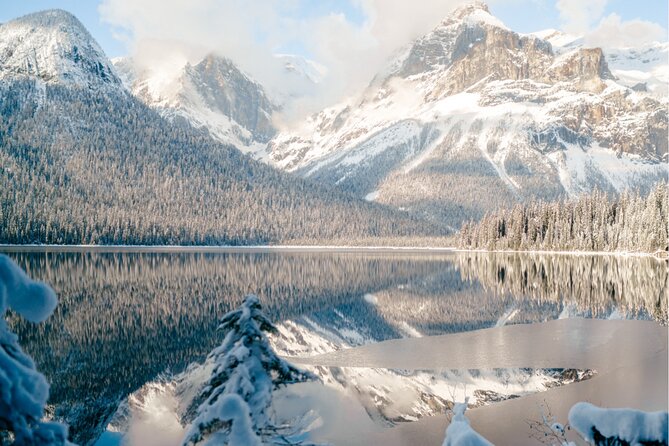
You’ll get about 1 hour in Field for lunch. Meals aren’t included, so you’ll either buy food there or bring something that works for your own style of travel.
I like this stop because it’s long enough to reset without turning into a forced sit-down. It also gives you a buffer before the next big visual hit.
Takakkaw Falls (summer): tall, reachable, and camera-friendly
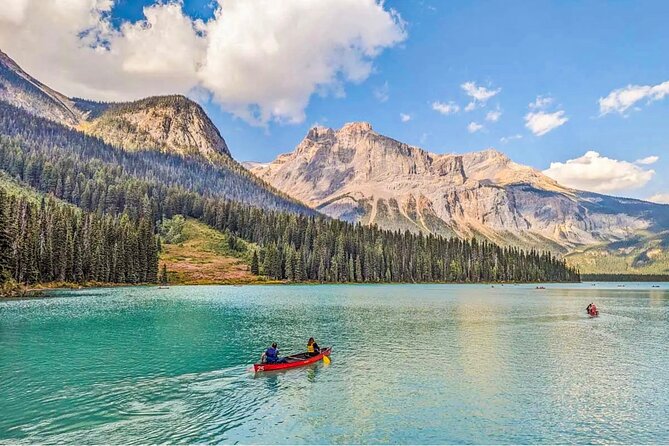
When the season is right, this is the waterfall stop that feels almost effortless.
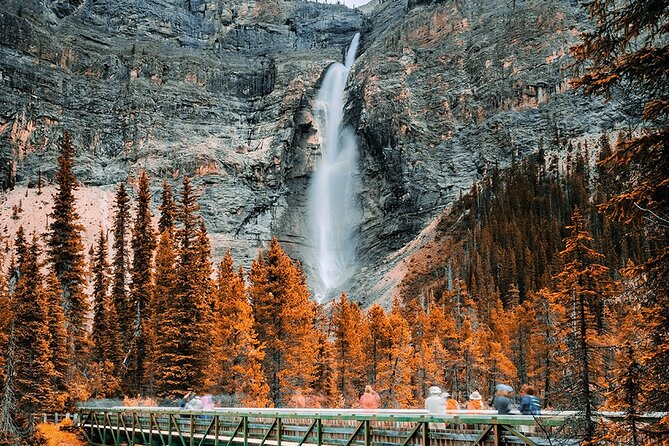
Takakkaw Falls is 373 meters tall and considered one of Canada’s tallest single-drop waterfalls. The good news for your legs: you can reach it with a 10 to 15 minute walk from the car park. Admission is included, and the stop time is around 30 minutes.
That short walk is a big deal. You get the drama of a huge waterfall without needing a long hike. It’s a great option if you want to see something epic but you don’t want to spend your whole day on foot.
The catch: mosquitoes in warm months
One practical note from the experience: the trail to Takakkaw can have mosquitoes, and if you’re traveling with older people or anyone who doesn’t like insects, plan accordingly (repellent and long socks go a long way).
Winter swap
In winter, Takakkaw changes to Marble Canyon. That swap shifts the day toward ice formations and short loops.
Marble Canyon (winter): crampons, blue river contrast, and short walks
In winter, Marble Canyon can be visually striking because you get snow-covered rock formations, while the river below may stay deep blue rather than fully frozen in the same way as everything around it.
The tour includes admission and about 1 hour for this stop in winter. The experience is built around traction gear: crampons are included, and you’ll want to use them. There are bridges that connect parts of the canyon, plus short loop options, so it’s not one long slog.
This stop is a good match for travelers who want winter scenery but still want to feel like they’re moving through different viewpoints rather than just standing in one cold spot.
Price and value: what you’re really paying for
At $119.34 per person for a 8 to 10 hour day, you’re paying for three things:
- Transportation in an air-conditioned vehicle over a long route
- Admission/tickets for the major stops included on the day
- A guide who helps with timing and photo positioning
Meals and personal expenses aren’t included, and gratuities aren’t included either (there’s a service fee/gratuity guideline of CAD 15 per person). So yes, you’ll still spend on food, and you should budget for that.
But the overall value holds because these are not just “pretty drive-by places.” Each stop is a different kind of view, and the included admissions reduce friction. Also, in the real world, the best part is how guides manage the tiny decisions: where to stand for the clearest angles, how to keep the group safe, and how to react when weather doesn’t cooperate.
That last part shows up in the reviews through consistent themes: guides like Vicky, Patrick, Ray, Kenneth, and Wing have been praised for photo help, friendly pacing, and real flexibility—especially when rain or trail conditions change.
What to pack for a day around Yoho’s water
This tour mixes short walks, one longer hike, and winter traction gear depending on season. Here’s what I’d bring to keep the day comfortable:
- Comfortable shoes with grip (and winter traction if needed; crampons are included in winter)
- A warm layer for standing still at viewpoints
- Rain gear, especially if you’re traveling in shoulder seasons
- Bug repellent in summer (Takakkaw approaches can get mosquito-y)
- If you’re doing Wapta Falls: expect a steady hike effort over uneven ground
- A small snack or picnic plan if you like having backup food (some guides note that a picnic style can work well during the day)
Also, if you have a group member who gets tired easily, this tour is manageable, but you’ll want to think about the 4 km round trip hike at Wapta Falls and choose accordingly.
Who this tour is best for
This fits best if you:
- want a one-day Yoho highlights sweep without renting a car
- like water views—lakes and waterfalls—and want both calm and dramatic scenery
- value photo assistance and timing more than spending hours hiking
- are okay with a long day (8 to 10 hours including travel)
It might not be the best fit if you:
- have trouble with a 4 km round trip hike
- can’t handle slippery conditions near waterfall areas
- want a super slow, leisurely pace with no walking between sights
Should you book it? My decision guide
Book this tour if you want a well-run day that hits major Yoho names—Emerald Lake, Natural Bridge, and the waterfall pair (Wapta Falls plus Takakkaw Falls in summer, or the winter swaps)—with admission included and a guide who actively helps with photos and safe timing.
Pass or choose another option if the Wapta Falls hike is a deal-breaker for your group, or if you know you need a shorter day with minimal walking. In that case, you’ll likely feel the day’s length more than you’d enjoy the views.
FAQ
How long is the tour, and when does it start?
The tour runs about 8 to 10 hours including travel time, and it starts at 7:30 am.
What language is the tour offered in?
The tour is offered in English.
Is admission included for the stops?
Yes. Admission tickets are included for the main stops listed (Emerald Lake, Natural Bridge, Wapta Falls, Lake Louise in winter, Takakkaw Falls, and Marble Canyon in winter, depending on season).
Do I need to hike?
In summer, Wapta Falls includes a 4 km round trip hike. Takakkaw Falls is reached by a short 10 to 15 minute walk from the car park.
What happens in winter instead of Wapta and Takakkaw Falls?
Wapta Falls changes to Lake Louise or Lake Louise Ski Resort in winter, and Takakkaw Falls changes to Marble Canyon in winter.
Is there winter gear included?
In winter, the tour includes crampons. Hot drinks are also included in winter.
How big is the group?
The tour has a maximum of 14 travelers.
More Yoho & Emerald Lake Trips from Banff



More Tour Reviews in Banff

Still scrolling? A few other Banff adventures worth a spot on the itinerary
Yoho & Emerald Lake Tours, compared.
 ★ 4.9Emerald Lake, Moraine, Louise, Johnston Canyon & Banff TownFrom $511,554 reviews
 ★ 4.8Lakes Moraine, Louise, Emerald, Johnston Canyon & Yoho TourFrom $611,023 reviews
 ★ 4.9Lake Louise, Moraine, Emerald Lake & Johnston CanyonFrom $50808 reviews
 ★ 4.5Day Trip: Lake Louise, Moraine Lake, Emerald Lake, BanffFrom $89680 reviews
 ★ 4.8Moraine Lake, Lake Louise, Emerald Lake and Yoho TripFrom $61272 reviews
 ★ 4.5Louise Louise, Banff Gondola, Minnewanka & Emerald LakesFrom $76224 reviews
 ★ 4.5Banff Gondola, Lake Louise, Emerald Lake and Lake Minnewanka TourFrom $74138 reviews
 ★ 5.0Lake Louise, Moraine/Bow, Emerald & Peyto – 4 Lakes in BanffFrom $59137 reviews
Browse the lists this tour appears in